
FIFA World Cup 2026: Spain Champions — Complete Overview
By Redacción Futbollibre · Published November 11, 2026
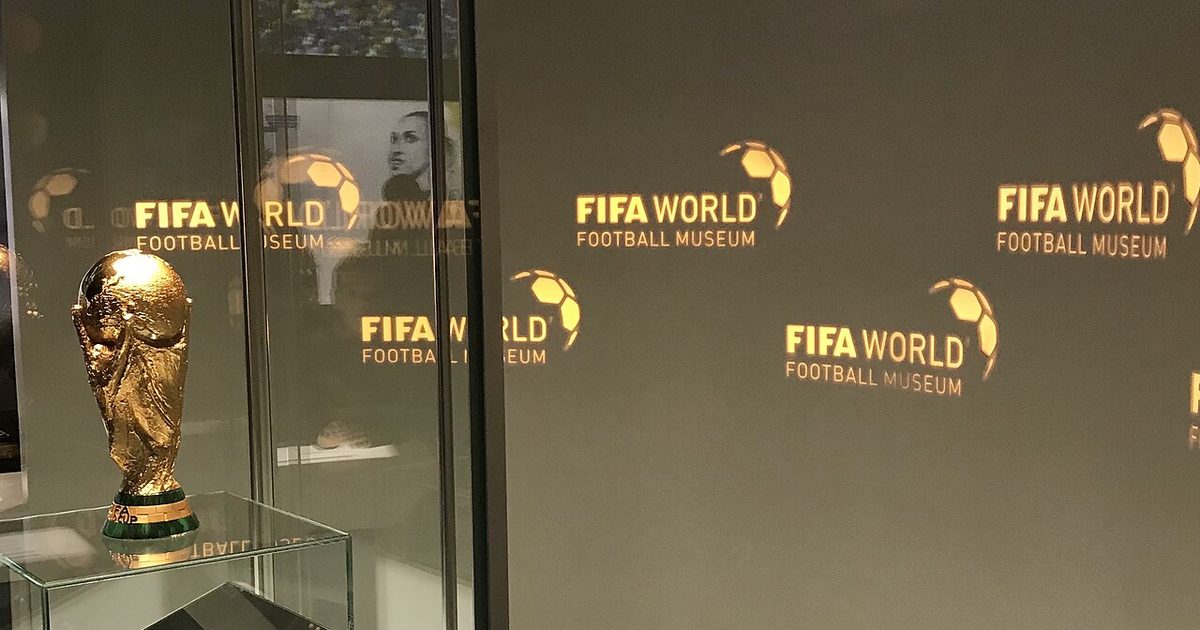
Photo: Ank Kumar, CC BY-SA 4.0, via Wikimedia Commons — the FIFA World Cup trophy.
Spain are world champions. On July 19, 2026, at MetLife Stadium in New Jersey, substitute Ferran Torres scored in the 106th minute of extra time to beat Argentina 1-0 and give Spain their second World Cup title — 16 years after their first, in South Africa in 2010. It was the fitting end to the biggest World Cup ever staged: 48 teams, 104 matches, 16 cities in three countries, and 39 days of football from June 11 to July 19, 2026.
This is the complete FIFA World Cup 2026 hub: the tournament at a glance, how the new 48-team format worked, who won and how, the group stage in brief, the stadiums, the stars and the records — plus a guide to every in-depth page we published on the tournament, from the full fixture list and group standings to the knockout bracket and the stats record book.
FIFA World Cup 2026 at a glance
| Fact | Detail |
|---|---|
| Edition | 23rd FIFA World Cup |
| Dates | 11 June – 19 July 2026 (39 days) |
| Hosts | United States, Mexico, Canada |
| Teams | 48 (first 48-team edition) |
| Matches | 104 (72 group stage + 32 knockout) |
| Goals | 308 |
| Champions | Spain (2nd title, first since 2010) |
| Runners-up | Argentina (defending champions) |
| Third place | England (beat France 6-4) |
| Fourth place | France |
| Golden Boot | Kylian Mbappé (France) — 10 goals |
| Golden Ball | Rodri (Spain) |
| Golden Glove | Unai Simón (Spain) |
| Opening match | Mexico 2-0 South Africa — Estadio Azteca, Mexico City, 11 June |
| Final | Spain 1-0 Argentina (aet) — MetLife Stadium, New Jersey, 19 July |
How the 48-team format worked
The 2026 tournament was the first World Cup with 48 teams, up from the 32-team field used from 1998 to 2022. The 48 qualifiers were drawn into 12 groups of four, labelled A through L, at the final draw in Washington D.C. on December 5, 2025. In the group stage every team played three matches, producing 72 group games.
Qualification for the knockouts followed a simple rule: the top two teams in each group advanced automatically, joined by the eight best third-placed teams across the 12 groups. That produced a field of 32 — and a brand-new round of 32, the first extra knockout round in World Cup history. From there it was single elimination all the way: round of 32, round of 16, quarter-finals, semi-finals, a third-place playoff and the final. Sixteen round-of-32 ties, eight round-of-16 ties, four quarter-finals, two semi-finals, one third-place match and one final added 32 knockout matches to the 72 group games — 104 in total, a tournament record. The two finalists each played eight matches, one more than in the old 32-team format.
The expansion also brought four debutants into the field: Cape Verde, Curaçao, Jordan and Uzbekistan all played at a World Cup for the first time, and Cape Verde went further than any of them, reaching the knockout stage. Mexico made history as the first nation to host the World Cup three times, after 1970 and 1986 — and the Estadio Azteca became the first stadium to stage three World Cup opening matches.
The eight best third-placed teams — DR Congo, Sweden, Ghana, Ecuador, Bosnia-Herzegovina, Algeria, Paraguay and Senegal — completed the 32-team knockout field. That second chance for third-placed teams was one of the format's defining features: a team could lose twice in the group stage and still reach the knockouts, which is exactly how several of the round-of-32 surprise packages got there. It also meant the group stage stayed alive longer — with eight third-place slots to chase, almost every team had something to play for in its final group match.
The full bracket, round by round, is on our FIFA World Cup brackets page.
The opening match: Mexico 2-0 South Africa
The tournament began on June 11, 2026, at the Estadio Azteca in Mexico City, where hosts Mexico beat South Africa 2-0 in front of a home crowd. Julián Quiñones scored the first goal of the World Cup in the 9th minute, drilling a low shot through the legs of South Africa goalkeeper Ronwen Williams, and Raúl Jiménez headed in the second in the 67th minute from a Roberto Alvarado cross.
The match made history for the wrong reasons as well: three players were sent off — Sphephelo Sithole and Themba Zwane for South Africa, and César Montes for Mexico — in the first World Cup opening match to feature three red cards. Brazilian referee Wilton Sampaio issued all three. South Africa finished the match with nine men, and Mexico's win was their first ever in a World Cup opening match, after seven previous failures.
It was also a repeat of the 2010 opener, when the same two teams drew 1-1 in Johannesburg, exactly 16 years earlier to the day. Mexico went on to win Group A with a perfect nine points, while South Africa recovered to finish second with four points and reach the knockout stage.
Who won the FIFA World Cup 2026?
Spain. The final, played on July 19, 2026, at MetLife Stadium in East Rutherford, New Jersey, was goalless after 90 minutes — and for long stretches it looked like it would stay that way. Argentina, the defending champions, sat deep and offered almost nothing in attack; Lionel Messi, playing his sixth World Cup at 39, touched the ball just 54 times. Spain had 20 shots but could not find a way past Emiliano Martínez, whose string of saves kept the champions alive.
The breakthrough came in the second half of extra time. Pedro Porro crossed from the right, Nico Williams headed the ball back across goal, and substitute Ferran Torres — on for Mikel Oyarzabal in the 62nd minute — drove it into the roof of the net in the 106th minute. It was Spain's 20th shot of the match, and Argentina, down to ten men after Enzo Fernández was sent off for a second yellow card in stoppage time at the end of regulation, had no answer. Argentina failed to register a single shot on target in the final — the first time that has happened in a World Cup final.
The title was Spain's second, after 2010, and it completed a European Championship–World Cup double: Spain won Euro 2024 and then the World Cup two years later, only the fourth team to win the two tournaments back to back. At 65, Spain coach Luis de la Fuente became the oldest World Cup-winning coach. Spain finished the tournament unbeaten and conceded just one goal in eight matches — the foundation of their title run.
Every score from the final and the rounds before it is on our World Cup 2026 fixtures page.
The road to the final
The knockout stage produced four quarter-finals and two semi-finals with verified results. In the quarter-finals, Spain beat Belgium 2-1, France beat Morocco 2-0, Argentina beat Switzerland 3-1 and England beat Norway 2-1. The semi-finals paired Spain with France — a 2-0 win for the eventual champions — and Argentina with England, which Argentina won 2-1. The beaten semi-finalists met in the third-place playoff, where England beat France 6-4 in a ten-goal thriller.
Spain's path shows what it took to win the expanded tournament. They topped Group H with seven points, then won five knockout matches in a row: Austria in the round of 32, Portugal 1-0 in the round of 16, Belgium 2-1 in the quarter-final, France 2-0 in the semi-final, and Argentina 1-0 in extra time in the final. Eight matches, no defeats, one goal conceded.
Argentina's route was nearly as impressive until the final. The defending champions won Group J with a perfect nine points, beat debutants Cape Verde 3-2 in the round of 32, Switzerland 3-1 in the quarter-final and England 2-1 in the semi-final — before running into Spain at MetLife.
The group stage in brief
The 72 group-stage matches decided the 32 knockout places. Here are the winners and runners-up of all 12 groups — the full tables, with points, goal difference and the eight best third-placed teams, are on our World Cup group standings page.
| Group | Winner | Runner-up |
|---|---|---|
| A | Mexico (9 pts) | South Africa (4) |
| B | Switzerland (7) | Canada (4) |
| C | Brazil (7) | Morocco (7) |
| D | USA (6) | Australia (4) |
| E | Germany (6) | Ivory Coast (6) |
| F | Netherlands (7) | Japan (5) |
| G | Belgium (5) | Egypt (5) |
| H | Spain (7) | Cape Verde |
| I | France (9) | Norway (6) |
| J | Argentina (9) | Austria |
| K | Colombia | Portugal |
| L | England | Croatia |
The headlines from the group stage: hosts Mexico were perfect in Group A, taking all nine points without conceding a goal. Group G was the tightest at the top, with Belgium and Egypt both finishing on five points and Belgium taking first place. And Cape Verde, on their World Cup debut, finished second in Group H without winning a match — enough, in the expanded format, to reach the knockout stage.
The surprises of World Cup 2026
The expanded field produced surprises that a 32-team tournament would never have allowed. The biggest was Cape Verde: on their World Cup debut, the island nation of barely half a million people finished second in Group H without winning a single match, then pushed defending champions Argentina hard in the round of 32 before losing 3-2. Only one of the four debutants reached the knockouts — but Cape Verde's run was the story of the group stage, and it showed exactly what the 48-team format was designed to do.
Group C produced the tightest race at the top outside Group G: Brazil and Morocco both finished on seven points, with Brazil taking first place and Morocco going through as runners-up. In Group G itself, Belgium won the group with only five points, level with Egypt in second — a reminder that in a 48-team field, the group stage rewards survival as much as dominance.
The knockout stage had its own shock in the third-place playoff. England, beaten 2-1 by Argentina in the semi-final, met France — beaten 2-0 by Spain — for third place, and the two sides produced a 6-4 thriller, ten goals in a match that is usually a cagey affair, and a fittingly chaotic end to the biggest World Cup ever played.
Where the games were played
The 16 stadiums were split across the three host nations: 11 in the United States, 3 in Mexico and 2 in Canada. The match allocation followed the same pattern — the United States hosted 78 games, Mexico 13 and Canada 13. The tournament opened at the Estadio Azteca in Mexico City and closed with the final at MetLife Stadium in East Rutherford, New Jersey. The largest venue was AT&T Stadium in Arlington, Texas, at 92,967 capacity; the smallest was BMO Field in Toronto, at 45,736.
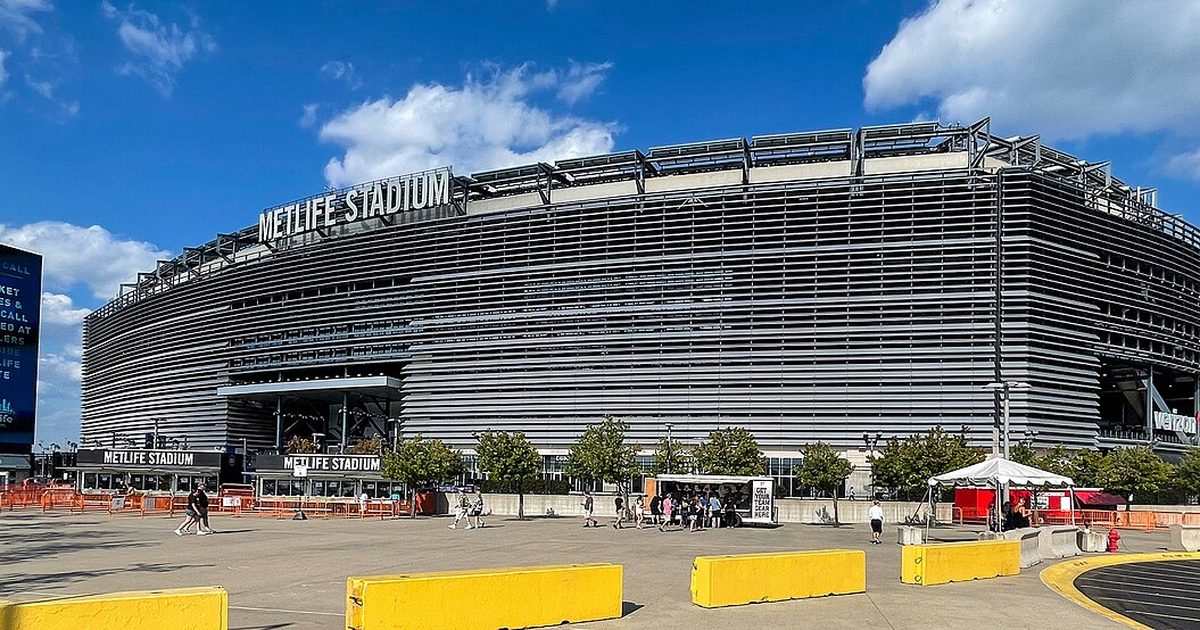
Photo: Kenneth C. Zirkel, CC BY-SA 4.0, via Wikimedia Commons — MetLife Stadium in East Rutherford, New Jersey, venue of the 2026 World Cup final.
The 16 host cities were Atlanta, Boston, Dallas, Houston, Kansas City, Los Angeles, Miami, New York/New Jersey, Philadelphia, San Francisco Bay Area and Seattle in the United States; Guadalajara, Mexico City and Monterrey in Mexico; and Toronto and Vancouver in Canada.
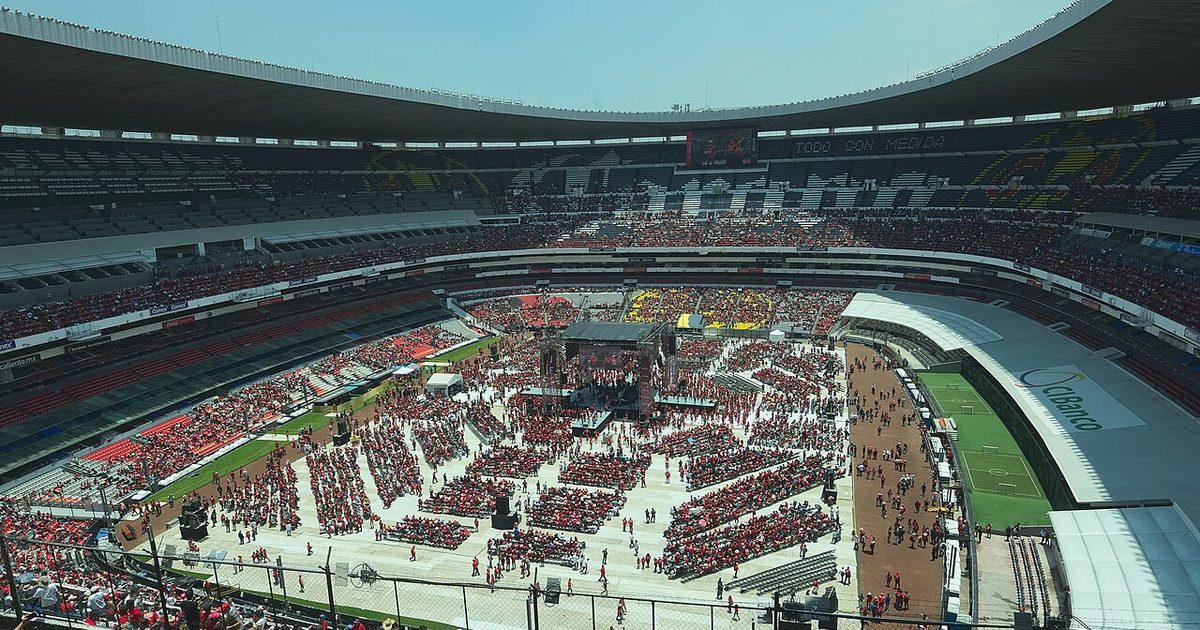
Photo: Carlos Valenzuela, CC BY-SA 4.0, via Wikimedia Commons — Estadio Azteca in Mexico City, where the 2026 World Cup opened.
A venue-by-venue guide, with capacities and the matches each stadium hosted, is on our World Cup 2026 stadiums page.
The stars and records of World Cup 2026
Kylian Mbappé won the Golden Boot with 10 goals — his second straight Golden Boot — and in doing so took his career World Cup tally to 22 goals, passing Miroslav Klose's 16 to become the all-time top scorer in World Cup history. Lionel Messi scored 8 goals in the tournament, taking his own total to 21, and won the Silver Ball at 39 in his sixth World Cup. Rodri of Spain won the Golden Ball as the tournament's best player, Mbappé took the Bronze Ball, and Unai Simón of Spain won the Golden Glove behind a defence that conceded once in eight matches.
The tournament produced 308 goals in 104 matches — just under three goals per game — a figure confirmed by FIFA's closing media release of 20 July 2026, as reported by the Daily Star. — Cape Verde, Curaçao, Jordan and Uzbekistan — all played their first World Cup matches, with Cape Verde going furthest by reaching the round of 32. Spain's defensive record stands out even more in that context: one goal conceded in eight matches, in a tournament where almost three goals were scored per game, is the foundation their title was built on. The final itself was the opposite of the tournament's attacking trend — one goal in 120 minutes — but it was the only match Spain needed to win by a single goal to become champions.
The full record book — top scorers, awards and tournament records — is on our FIFA World Cup stats page, and the best individual performances are ranked on our World Cup 2026 best players page.
World Cup 2026 hub: every guide
Everything we published on the tournament, in one place. Each guide below covers one part of the World Cup in depth — start here and follow the links for the full detail.
- World Cup 2026 fixtures — the complete schedule and every verified result from all 104 matches.
- World Cup 2026 group standings — the final tables of all 12 groups and the eight best third-placed teams.
- FIFA World Cup brackets — the full knockout bracket, from the round of 32 to the final.
- FIFA World Cup stats — the 2026 record book: scorers, awards and tournament records.
- World Cup 2026 recap — the story of the tournament: Spain's title run, the surprises and the numbers.
- World Cup 2026 best players — the players who defined the tournament, ranked and explained.
- World Cup 2026 stadiums — all 16 venues, capacities and the matches each one hosted.
- World Cup explained — the beginner's guide: format, rules and how the tournament works.
Quick answers
When was the 2026 World Cup played? The tournament ran from June 11 to July 19, 2026, hosted by the United States, Mexico and Canada.
Who won the 2026 World Cup? Spain, beating Argentina 1-0 in extra time in the final at MetLife Stadium on July 19, 2026. Ferran Torres scored the winner in the 106th minute.
How many teams played in the 2026 World Cup? 48 teams — the first World Cup with an expanded 48-team field, up from 32. They played 104 matches in total.
How did the new 48-team format work? Twelve groups of four, with the top two from each group plus the eight best third-placed teams advancing to a new round of 32, then straight knockout football to the final.
Which stadiums hosted the 2026 World Cup? Sixteen stadiums in 16 cities: 11 in the United States, 3 in Mexico and 2 in Canada. The final was at MetLife Stadium in New Jersey; the opening match was at Estadio Azteca in Mexico City.
Who won the Golden Boot in 2026? Kylian Mbappé of France, with 10 goals — his second consecutive Golden Boot.
Sources
Results, records and tournament facts on this page are checked against FIFA's official tournament coverage:
- FIFA — FIFA World Cup 2026 — official tournament hub: fixtures, results, standings and records, including the final, Spain 1-0 Argentina.
- FIFA — Tournament poster unveiled: 100 days to go — confirms the tournament format: 104 matches, 16 host cities, 11 June to 19 July 2026, final at New York New Jersey Stadium.