
FIFA World Cup Stats: 2026 Tournament Numbers and Records
By Redacción Futbollibre · Published October 21, 2026
The 2026 FIFA World Cup was the 23rd edition of the tournament and the biggest ever staged: 48 teams, 104 matches, and a month of football across the United States, Mexico and Canada from June 11 to July 19, 2026. This guide collects the FIFA World Cup stats that defined the tournament — the verified numbers from Spain's triumph, the records set along the way, and the all-time history that 2026 rewrote. Every figure below comes from the verified tournament record; nothing here is estimated.
Spain won the tournament unbeaten, conceding just one goal in eight matches. They beat Argentina 1-0 in extra time in the final at MetLife Stadium on July 19, with Ferran Torres scoring in the 106th minute. That single goal was the difference between the champions and the runners-up — and the stats behind it tell the story of the most defensively dominant World Cup win in the modern era.
The tournament in numbers
The headline figures of World Cup 2026:
- 23rd edition of the FIFA World Cup.
- 48 teams — the first expanded tournament.
- 104 matches — 72 in the group stage, 32 in the knockouts.
- 12 groups of four teams, labeled A through L.
- 3 host nations — the United States, Mexico and Canada — and 16 host cities.
- 16 stadiums: 11 in the USA, 3 in Mexico, 2 in Canada.
- 78 matches played in the USA, 13 in Mexico and 13 in Canada.
- 4 debutants: Cape Verde, Curaçao, Jordan and Uzbekistan.
Mexico became the first nation to host the World Cup three times, after 1970 and 1986. The tournament opened at the Estadio Azteca in Mexico City and closed at MetLife Stadium in East Rutherford, New Jersey.
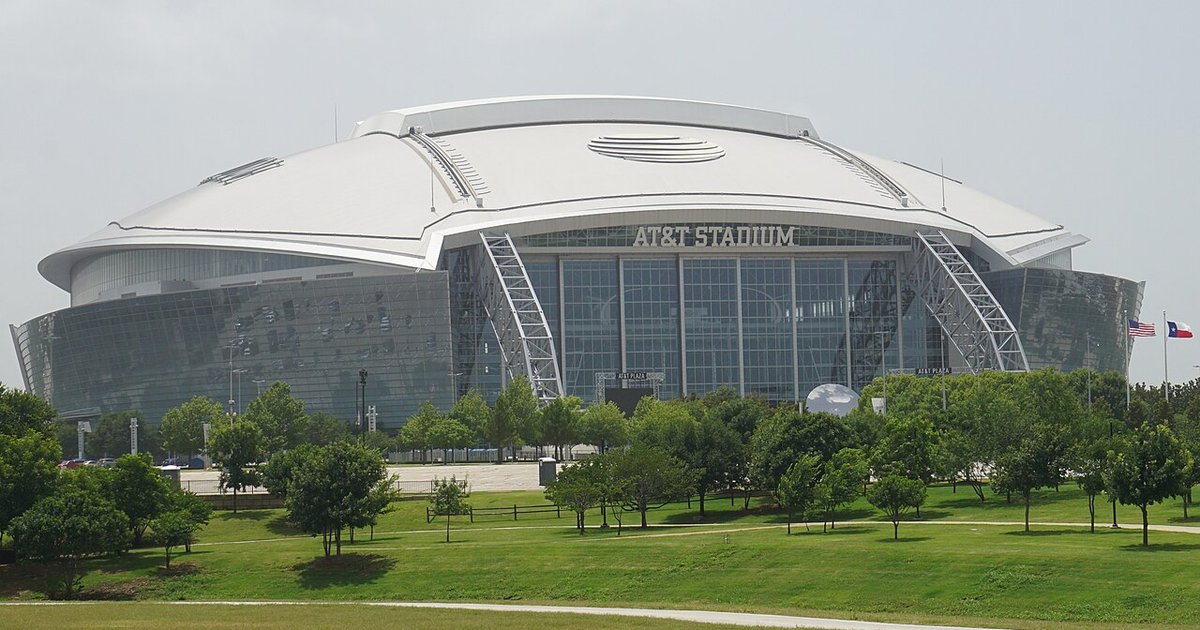
Photo: Michael Barera, CC BY-SA 4.0, via Wikimedia Commons — AT&T Stadium in Arlington, Texas, the largest 2026 venue at 92,967 capacity.
Spain: the numbers behind the champions
Spain's 2026 campaign, coached by Luis de la Fuente, was built on control and an almost impenetrable defense:
- Unbeaten across the entire tournament.
- 1 goal conceded in 8 matches — three group games and five knockout rounds.
- 7 points in Group H (winners), then five straight knockout wins: Austria (round of 32), Portugal 1-0 (round of 16), Belgium 2-1 (quarter-final), France 2-0 (semi-final), Argentina 1-0 after extra time (final).
- 2nd World Cup title, after 2010.
One goal conceded in eight games is the foundation of Spain's triumph. Their defense, marshaled in front of Golden Glove winner Unai Simón, simply did not break — not against Portugal, not against Belgium, not against France, and not against Argentina in the final.
The final: a statistical landslide
The final on July 19, 2026, was decided by Ferran Torres' 106th-minute goal, assisted by a Nico Williams header. But the underlying numbers show how one-sided the match was:
- Spain 20 shots, Argentina 3.
- Argentina 0 shots on target — the first time any team has failed to test the goalkeeper in a World Cup final.
- Dibu Martínez 11 saves — a record for a World Cup final — kept Argentina alive until extra time.
- Lionel Messi, 39, played his sixth World Cup and recorded 54 touches in the final.
Martínez's eleven saves are the standout individual goalkeeping performance in a final on record. Without them, Spain's dominance would have shown on the scoreboard long before extra time. For Argentina, the zero in the shots-on-target column is a historic first — no finalist had ever gone a full final without one.
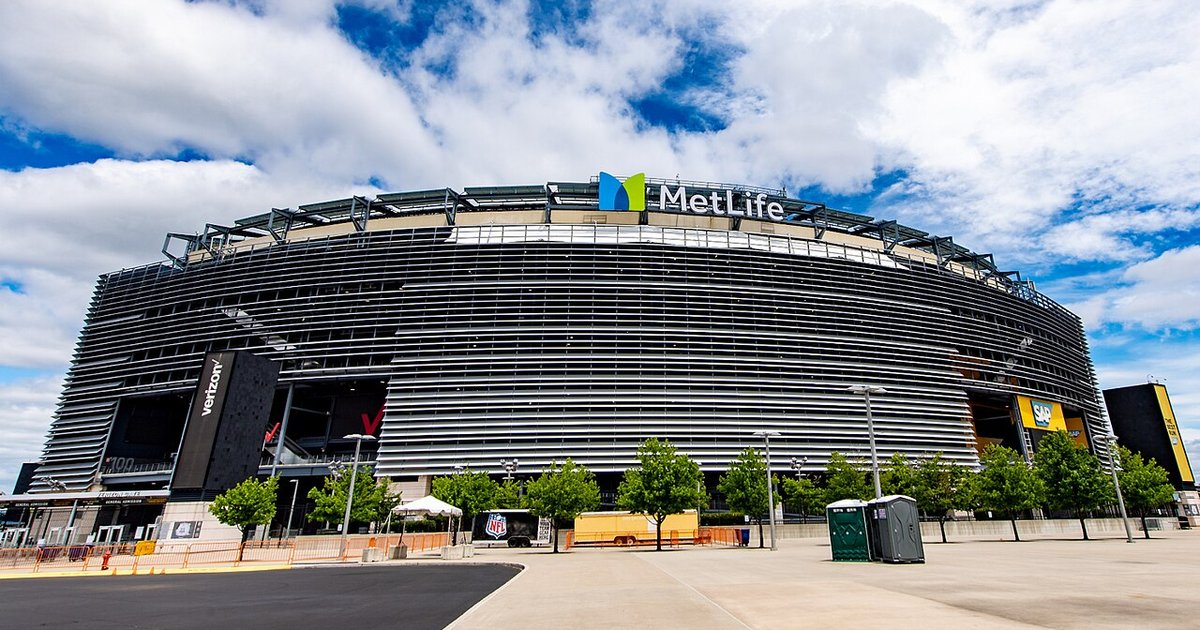
Photo: Thecoolone1223, CC BY 4.0, via Wikimedia Commons — MetLife Stadium, East Rutherford, New Jersey, where Spain beat Argentina 1-0 in the final.
The knockout rounds in numbers
The verified results from the knockout stage produced some remarkable scorelines:
- Argentina 3-2 Egypt (round of 16) and Belgium 4-1 USA (round of 16) were the highest-scoring verified ties of the last 16.
- Switzerland 0-0 Colombia (round of 16) was the only verified goalless draw of the knockouts — Switzerland advanced.
- England 6-4 France in the third-place playoff was a ten-goal thriller, the highest-scoring verified match of the knockout stage.
- Spain 1-0 Portugal (round of 16), Spain 2-1 Belgium (quarter-final) and Spain 2-0 France (semi-final) showed the champions winning three different ways: a shutout, a one-goal margin, and a clean-sheet statement.
- Argentina 3-1 Switzerland (quarter-final) and Argentina 2-1 England (semi-final) carried the runners-up to the final.
The third-place playoff deserves its own line in the record books: ten goals in a single match, with England beating France 6-4 to finish third.
The awards: verified winners
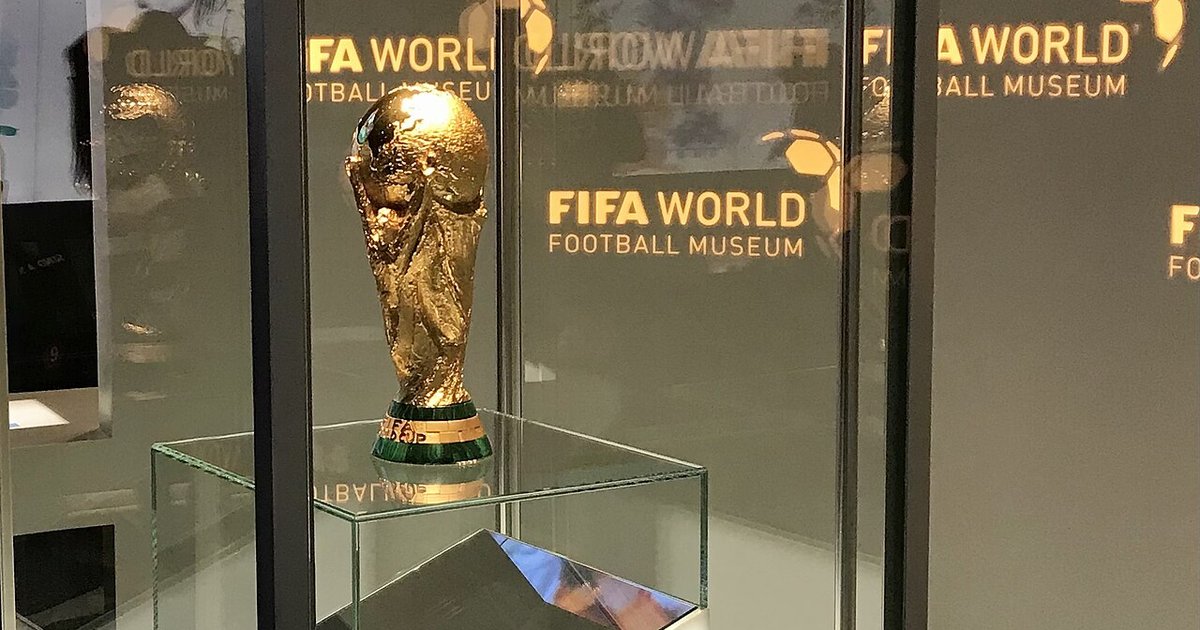
Photo: Ank Kumar, CC BY-SA 4.0, via Wikimedia Commons — the FIFA World Cup trophy, lifted by Spain in 2026.
- Golden Ball: Rodri (Spain). The tournament's best player played 726 minutes and was substituted only twice in the entire tournament — against Cape Verde and against Argentina in the final.
- Silver Ball: Lionel Messi (Argentina). At 39, in his sixth World Cup, Messi was named the tournament's second-best player.
- Bronze Ball: Kylian Mbappé (France).
- Golden Boot: Kylian Mbappé (France), 10 goals — his second straight Golden Boot.
- Golden Glove: Unai Simón (Spain) — the goalkeeper behind Spain's one-goal-conceded campaign.
Rodri's 726 minutes underline his centrality: Spain's system ran through him, and he was taken off only twice in eight matches. Mbappé's ten goals gave him back-to-back Golden Boots, while Messi's Silver Ball at 39, in a sixth World Cup, is a longevity record in itself.
All-time records: where 2026 fits in history
Spain's 2026 title moved them onto two World Cup wins, alongside France and Uruguay. The all-time roll of honor after 2026:
| Nation | Titles |
|---|---|
| Brazil | 5 |
| Germany | 4 |
| Italy | 4 |
| Argentina | 3 |
| Spain | 2 |
| France | 2 |
| Uruguay | 2 |
| England | 1 |
The all-time top scorer in World Cup history is now Kylian Mbappé with 22 goals (Lionel Messi 21, Miroslav Klose 16). On the hosting side, 2026 set its own firsts: the first 48-team edition, the first hosted by three nations, the first with a round of 32, and Mexico's record as the first three-time host.
The United States at the 2026 World Cup: the numbers
As co-hosts, the United States entered the tournament with home advantage and a group — Group D, alongside Paraguay, Australia and Türkiye — that looked winnable rather than easy. Mauricio Pochettino’s side made the most of it. They won their first two matches, secured qualification with a game to spare, and topped the group with six points, winning two group games at a World Cup for the first time since the inaugural tournament in 1930. It was the strongest group-stage return in the programme’s history: eight goals in three matches, a record for the United States at a World Cup, and the fastest the team had ever reached the knockout stage.
The campaign opened at Los Angeles Stadium on 12 June with a 4-1 win over Paraguay — the most goals the United States had ever scored in a single World Cup match. Damián Bobadilla’s seventh-minute own goal, forced by Christian Pulisic and Weston McKennie, set the tone, and Folarin Balogun scored twice before half-time, the first American to score two goals in a World Cup match since Bert Patenaude in 1930. Mauricio pulled one back for Paraguay in the 73rd minute before substitute Gio Reyna curled in a late fourth. The one concern was Pulisic, withdrawn at half-time with a calf injury; he missed the next match entirely.
Without Pulisic, the United States still beat Australia 2-0 at Lumen Field in Seattle on 19 June. Balogun forced another early own goal, this time from Cameron Burgess in the 11th minute, and defender Alex Freeman headed in a second just before half-time, after a VAR check overturned an initial offside flag. The win sealed a place in the round of 32 with a game to spare and put the United States on the brink of winning the group. Freeman became the sixth-youngest American to score at a World Cup.
With qualification already secure, Pochettino made nine changes for the final group match against Türkiye on 25 June, and the rotated side lost 3-2 at Los Angeles Stadium. Auston Trusty headed the United States in front after three minutes and Sebastian Berhalter levelled at 2-2 early in the second half, but Arda Güler and Baris Alper Yilmaz had turned the game around before the break, and Kaan Ayhan won it for Türkiye in the eighth minute of stoppage time. The defeat cost the hosts a perfect record but not top spot: six points, a goal difference of +4, and first place in Group D, ahead of Australia and Paraguay on four points each and Türkiye on three.
The round of 32 brought a first World Cup knockout win since 2002. At San Francisco Bay Area Stadium on 1 July, Balogun scored his third goal of the tournament on the stroke of half-time against Bosnia and Herzegovina, then was sent off in the 64th minute. Down to ten men, the United States held on, and Malik Tillman sealed a 2-0 win with a superb free kick in the 82nd minute. Balogun’s red card was later rescinded, clearing him to play in the next round.
Belgium ended the run in Seattle on 6 July, winning 4-1 in the round of 16. Charles De Ketelaere scored after nine minutes, Tillman levelled with a deflected free kick in the 31st, and De Ketelaere headed Belgium back in front two minutes later. Hans Vanaken punished a goalkeeping error from Matt Freese in the 57th minute, and substitute Romelu Lukaku added a fourth in stoppage time. The defeat meant the United States were out of the World Cup — and, with Mexico and Canada also eliminated at the same stage, all three host nations exited in the round of 16.
The numbers sum up a campaign that was the United States’ best in a generation, and also its limit:
- 5 matches, 3 wins, 2 defeats — 11 goals scored, 8 conceded.
- Top scorer: Folarin Balogun, 3 goals, followed by Malik Tillman with 2. Reyna, Freeman, Trusty and Berhalter scored one each, and the United States forced two own goals.
- Christian Pulisic: 0 goals, 1 assist in four appearances — the assist set up Balogun’s first goal against Paraguay.
- Group D: 6 points, 8 goals for, 4 against — a programme-best group-stage points total.
- First knockout win since 2002, and the first time the United States have won three matches at a single World Cup — but a fourth consecutive exit in the round of 16.
| Date | Round | Match | Score | Scorers |
|---|---|---|---|---|
| 12 June 2026 | Group D | USA vs Paraguay | 4–1 | Bobadilla (og) 7′, Balogun 31′, 45+5′, Reyna; Mauricio 73′ |
| 19 June 2026 | Group D | USA vs Australia | 2–0 | Burgess (og) 11′, Freeman 43′ |
| 25 June 2026 | Group D | Türkiye vs USA | 2–3 | Trusty 3′, Berhalter 49′; Güler 10′, Yilmaz 31′, Ayhan 90+8′ |
| 1 July 2026 | Round of 32 | USA vs Bosnia and Herzegovina | 2–0 | Balogun 45′, Tillman 82′ |
| 6 July 2026 | Round of 16 | USA vs Belgium | 1–4 | Tillman 31′; De Ketelaere 9′, 33′, Vanaken 57′, Lukaku 90+3′ |
For the full group tables, see the World Cup 2026 group standings page.
Quick answers
How many goals did Spain concede at World Cup 2026? Just one, in eight matches — the foundation of their unbeaten title run.
Who won the Golden Boot in 2026? Kylian Mbappé with 10 goals — his second consecutive Golden Boot.
Who won the Golden Ball in 2026? Rodri of Spain, who played 726 minutes and was substituted only twice all tournament.
What is the record for saves in a World Cup final? Dibu Martínez made 11 saves for Argentina in the 2026 final against Spain — a record.
Who is the all-time top scorer in World Cup history? Kylian Mbappé, with 22 World Cup goals — ahead of Lionel Messi (21) and Miroslav Klose (16).
How many World Cup titles does Spain have? Two — 2010 and 2026.
How far did the United States go at World Cup 2026? The United States won Group D with six points, beat Bosnia and Herzegovina 2-0 in the round of 32, and were knocked out in the round of 16, losing 4-1 to Belgium in Seattle on 6 July 2026.
Who was the United States’ top scorer at World Cup 2026? Folarin Balogun, with three goals — two against Paraguay and one against Bosnia and Herzegovina. Malik Tillman scored twice.
Group-stage numbers
The 72 group-stage matches produced three perfect records: Mexico (Group A), France (Group I) and Argentina (Group J) all finished on nine points. Six group winners finished on seven points — Switzerland, Brazil, the Netherlands, Spain, Colombia and England. The USA and Germany won their groups on six points; Belgium took Group G on five.
The tightest groups were decided by the finest margins. In Group G, Belgium and Egypt both finished on five points. In Group C, Brazil and Morocco both finished on seven. In Group H, behind Spain's seven, Cape Verde took second on three points while Uruguay and Saudi Arabia both finished on two. The best-third cutoff fell at three points: seven qualifiers on four, Senegal through on three.
The debutants' group-stage numbers: Cape Verde 3 points (second, qualified), Curaçao 1 point, Jordan 0, Uzbekistan 0.
Knockout numbers
The 32-team knockout stage meant 16 round-of-32 ties, 8 in the round of 16, 4 quarter-finals, 2 semi-finals, a third-place playoff and the final — 32 matches. The verified scorelines include the round of 16's Argentina 3-2 Egypt and Belgium 4-1 USA, the only verified goalless draw of the knockouts (Switzerland 0-0 Colombia, Switzerland advancing), and the ten-goal third-place playoff as England beat France 6-4.
Spain's knockout numbers underline their dominance: 1-0 over Portugal, 2-1 over Belgium, 2-0 over France, 1-0 over Argentina in extra time — four wins, and with the group stage included, one goal conceded in eight matches.
Venue and hosting numbers
Sixteen stadiums across three countries: 11 in the United States, 3 in Mexico, 2 in Canada. The USA hosted 78 of the 104 matches; Mexico and Canada hosted 13 each. The largest stadium was AT&T Stadium in Arlington, Texas (92,967); the smallest was BMO Field in Toronto (45,736). The opener was staged at the Estadio Azteca in Mexico City; the final at MetLife Stadium in East Rutherford, New Jersey.
Mexico's third hosting (after 1970 and 1986) made it the first three-time World Cup host nation — a record of its own in the tournament's hosting history.
The 2026 record book
The 2026 tournament set records at every level — format, hosting, and individual performance:
| Record | Detail |
|---|---|
| Most teams | 48 — first expanded edition |
| Most matches | 104 — 72 group + 32 knockout |
| Most host nations | 3 — USA, Mexico, Canada (first) |
| First round of 32 | New knockout round for the 32-team field |
| First three-time host | Mexico — 1970, 1986, 2026 |
| Most saves in a final | Dibu Martínez — 11 (Argentina vs Spain) |
| First final without a shot on target | Argentina — 0 on target vs Spain |
| Fewest conceded by champions | Spain — 1 goal in 8 matches, unbeaten |
| Back-to-back Golden Boots | Kylian Mbappé — 10 goals in 2026, second straight |
| Sixth World Cup at 39 | Lionel Messi — Silver Ball in his sixth tournament |
Two of these records came from the same match: the final produced both the saves record (Martínez's 11) and the unwanted first of zero shots on target (Argentina). Spain's one-conceded-in-eight stands as the defensive benchmark of the 48-team era's first edition.
All-time context: the champions' club
Spain's 2026 win was their second World Cup title, sixteen years after their first in 2010. That moves Spain onto two titles, level with France and Uruguay, and behind Argentina (3), Germany and Italy (4), and Brazil (5). England remain on one title — though their third-place finish in 2026, sealed with a 6-4 playoff win over France, was their best return at this edition.
The all-time scoring record now belongs to Kylian Mbappé with 22 World Cup goals — he passed Lionel Messi (21) and Miroslav Klose (16) at the 2026 tournament, where his 10 goals also won him a second consecutive Golden Boot.
Why 2026's numbers matter
Expansion to 48 teams carried a risk: more matches could have meant diluted quality. The verified numbers say otherwise. A record 104 matches were played across 16 stadiums in three countries, the champions conceded once in eight games, the final produced a goalkeeping record, and the Golden Boot race was won with a double-digit tally for the second tournament running. The first 48-team World Cup did not just break structural records — it produced statistical landmarks, from Martínez's eleven saves to Argentina's unprecedented blank on target, that will be referenced for decades.