
Soccer Training Guide for Beginners
By Redacción Futbollibre · Published November 11, 2026
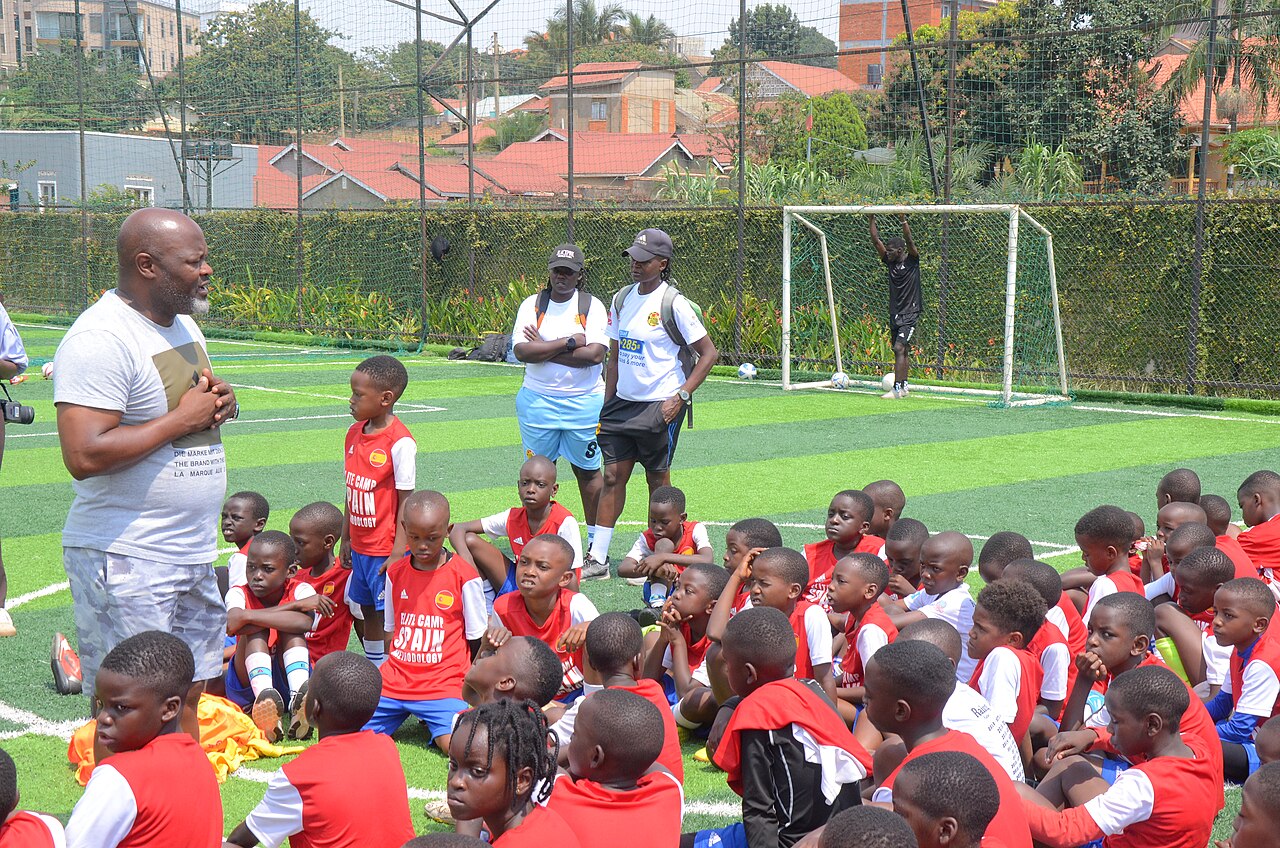
Young players at a soccer academy training session. Photo: Samson Ssemakadde, CC0, via Wikimedia Commons.
Most people who search for soccer training want the same thing: a clear answer to how to get better, what to practise, what to buy and where to go. Not a motivational speech, and not a professional club's pre-season programme. This guide is built for the rest of us — kids starting out, adults returning to the game, parents looking for a good academy, and goalkeepers who train differently from everyone else.
Soccer training works when it is regular, specific and matched to the player. Two focused sessions a week beat five random kickabouts. A cone drill you repeat for ten minutes beats an hour of unstructured shooting. And the right equipment list is short: a ball, boots, cones and water. Everything else is optional. Here is how to train, what the drills actually do, and how to find good coaching near you.
What soccer training actually means
Training is not one thing. A good programme works on four pillars, and the balance between them changes with age and level:
Technique is what you do with the ball: first touch, passing, dribbling, shooting and heading. It is the pillar that improves fastest with short, frequent practice, and it is the one most players neglect once they can already kick a ball.
Physical fitness is speed, stamina, agility and strength. Soccer is a game of repeated sprints with short recoveries, so fitness training means intervals and change-of-direction work, not long slow jogging. A player who arrives at the ball a second late loses it, however good their touch is.
Tactics is where you stand, when you move and what you do without the ball. You cannot train this alone — it needs teammates, opponents and small-sided games. This is why even the best solo training plan needs at least one group session a week.
Mindset is concentration, decision-making under pressure and the habit of recovering quickly from mistakes. It is trained by playing in situations that matter — small-sided games with a score, drills with a time limit, sessions that force quick choices — rather than by endless repetition without pressure.
For a beginner, the order is simple: technique first, fitness second, tactics through playing, mindset through all of it. A child who can control the ball and pass it cleanly will enjoy the game, and enjoyment is what keeps anyone training long enough to improve.
How to train for soccer: build your week
A training week does not need to be complicated. Three sessions plus a match is a solid base for most players, and two sessions is enough if you are starting out or returning after a break. Every session follows the same shape: warm up, main work, play, cool down.
| Day | Session | Focus |
|---|---|---|
| Tuesday | 60 minutes | Technique: passing, first touch, dribbling through cones |
| Thursday | 60 minutes | Fitness and shooting: intervals, change of direction, finishing |
| Saturday | 45 minutes + match | Small-sided games, positioning, playing under pressure |
| Sunday | Rest or light recovery | Stretching, easy walk or swim, no intense training |
Warm up for ten minutes before anything intense: light jogging, dynamic stretches, and ball work at a gentle pace. A proper warm-up is not optional — cold muscles and sudden sprints are how most training injuries happen. Finish with five minutes of easy jogging and stretching while your muscles are still warm.
Keep sessions to 45–60 minutes for most players, and shorter for children. An hour of focused work beats two hours of drifting. If you train alone, set a timer for each block: ten minutes of warm-up, twenty minutes on one skill, fifteen minutes on a second skill, and ten minutes of small-sided play or shooting to finish. Structure is what turns kicking a ball around into training.
The drills that build real skill
Good drills share three traits: they involve the ball constantly, they have a clear target, and they get harder as you improve. These are the ones that matter most.
Passing and first touch. Pass against a wall or a rebounder and control the return with different parts of the foot — inside, outside, sole. Two-touch passing (control, then pass) builds the habit that separates decent players from good ones: the first touch should already point the ball where the next pass is going. Start close to the wall and step back as your control improves.
Dribbling through cones. Set out a line of cones a metre apart and dribble through them with both feet, keeping the ball close. Then try it at speed, then with a change of direction at the end. Cones are the cheapest training equipment you will ever buy and the most useful: they turn an empty patch of grass into a training ground. Our guide to soccer drills for beginners walks through cone drills and other starter exercises in detail.
Shooting. Practise from the edge of the box with a simple rule: placement before power. Pick a corner, hit it five times, then move. Shooting with your weaker foot for ten minutes a session is the fastest way to become a two-footed player, and it pays off more than any number of long-range attempts.
Small-sided games. Three-a-side or four-a-side on a small pitch gives every player far more touches than a full eleven-a-side game. It is the closest thing to a shortcut in soccer training: more decisions, more passes, more shots, more defending — all in the same hour. If your week has room for only one group activity, make it a small-sided game.
For a deeper look at individual technique, see our soccer skills guide, which breaks down the core moves and how to practise them.
Goalkeeper training is a different job
Goalkeepers train apart from the outfield group for most of the session, and for good reason: their skills barely overlap. A goalkeeper's week is built around diving and handling, footwork, positioning and distribution.
Diving and handling start with the basics — the low collapse dive, the high catch, and holding the ball cleanly rather than parrying it. Repetition matters more than spectacle: a keeper who catches ten easy balls cleanly is worth more than one who makes a single spectacular save and spills the next three.
Footwork is the hidden skill. Short, quick steps get a keeper set before the shot arrives, and most goals conceded by young keepers come from being flat-footed, not from slow reactions. Ladder drills and short shuttle runs build this faster than any amount of shot-stopping practice.
Distribution is now half the job. Modern goalkeepers start attacks with throws and passes, so training includes playing out from the back under pressure — a skill that needs outfield players to practise against.
Goalkeepers also need their own equipment: gloves that fit properly, padded kit for diving on hard ground, and a spare pair of gloves for wet conditions. If your child wants to be a goalkeeper, look for a club or academy that runs dedicated goalkeeper sessions rather than leaving the keeper to face shots at the end of outfield training. That one choice makes more difference than any piece of equipment.
Soccer training equipment: what you need and what you don't
Walk into a sports shop and soccer training looks expensive. It is not. The essential list is short, and most of the rest can wait until you know you will stick with it.
| Item | Verdict | Notes |
|---|---|---|
| Ball (right size) | Essential | Size 3 for under-8s, size 4 for ages 8–12, size 5 for 13 and up |
| Boots or trainers | Essential | Match the surface: firm-ground studs for grass, trainers for hard ground |
| Training cones | Essential | A set of 20–50 flat cones covers almost every drill |
| Water bottle | Essential | Hydration matters more than any gadget |
| Small portable goals | Useful | Turn any space into a shooting or small-sided session |
| Rebounder board | Useful | Lets you practise passing and first touch alone |
| Agility ladder | Optional | Good for footwork; cones can do most of the same work |
| Training devices | Optional | Rebound trainers and solo trainers help, but never replace playing |
The one thing worth spending on is the ball. A cheap, misshapen ball bounces unpredictably and teaches bad habits; a decent match ball in the right size is the single best investment a beginner can make. Boots matter less than people think — fit and comfort beat brand — and on hard ground, ordinary trainers are fine.
Training devices — rebound trainers, solo trainers that tether the ball, and similar gadgets — are genuinely useful for solo practice, and they are among the most searched-for training products. They help, but they are a supplement, not a substitute: no device teaches you where to stand, when to pass, or how to read an opponent. Buy one only after you have the essentials and a regular routine.
How to find soccer training near you
Searching for soccer training near you will turn up academies, clubs, private coaches and training centers, and they are not all the same. The right choice depends on who is training and why.
Clubs and academies suit most players. They offer regular group sessions, matches, and a pathway from beginner groups to competitive teams. Look for a clear session structure, qualified coaches, and groups split by age and ability rather than one mixed session for everyone.
Private coaching suits players with a specific goal — a trial coming up, a weak foot to fix, a goalkeeper who needs dedicated sessions. One-to-one coaching is the fastest way to correct a technical fault, but it is expensive and it cannot teach the parts of the game that need teammates. A mix of one private session and regular group training is usually better than private coaching alone.
Training centers — dedicated facilities with pitches, small-sided leagues and coaching programmes — sit between the two. They are a good option if your local club is full or does not run sessions for your age group.
Before signing up anywhere, check four things: the coach's qualifications and experience with your age group, the size of the training groups, whether there is a trial session before you commit, and whether the programme includes matches as well as drills. A good provider will answer all four happily. If a place promises rapid results or guarantees a professional contract, walk away — no honest coach promises either.
Training for kids vs adults
Children and adults need different training, and the difference is not just intensity. For kids, the priority is enjoyment and touches on the ball. Sessions should be short — 45 to 60 minutes — with small-sided games and plenty of variety. Formal fitness work has no place in children's training; they get fit by playing. Match lengths are shorter too: common youth formats run two halves of 30 minutes for under-12s, 35 for under-14s, 40 for under-16s and 45 for under-19s.
Adults returning to the game should start gently: two sessions a week, a proper warm-up every time, and at least one rest day between hard sessions. The biggest mistake adult beginners make is copying a professional's workload in week one. Fitness returns faster than most people expect, but tendons and joints need time — build up over four to six weeks rather than going all out in the first one.
For both groups, rest is part of training, not the opposite of it. Muscles adapt and skills consolidate between sessions, not during them. A player who trains every day without rest improves more slowly than one who trains three times a week and sleeps well.
Mistakes that slow your progress
Only playing matches. Matches are the test, not the training. Players who only play at the weekend repeat the same habits for years. Even one focused drill session a week changes the trajectory.
Skipping the warm-up. It takes ten minutes and prevents the injuries that cost months. There is no shortcut here.
Practising only what you are already good at. It feels great and teaches nothing. Spend the first half of each session on your weakest skill — your weaker foot, your first touch under pressure, your heading — and the second half on what you enjoy.
Copying professional routines. A professional trains full-time with medical support and recovery built in. An amateur who copies that volume without the recovery gets injured, not better.
Training without a plan. Decide before each session what you are working on and how you will know it worked — ten clean first touches in a row, five shots on target out of five, a drill completed at full speed. Without a target, practice drifts.
If you want a broader plan for improvement beyond training sessions, our guide on how to get better at soccer covers the habits that support training: watching the game, recovery, and mindset.
Quick answers
How often should I train for soccer? For most players, 2–3 focused sessions a week plus a match is a good base. Beginners can start with 2 sessions of 45–60 minutes and add a third once the routine feels easy.
Can I train for soccer on my own? Yes. Ball mastery, cone dribbling, passing against a wall or rebounder, and shooting practice all work alone. Add small-sided games or a team session each week for the parts you cannot train solo: positioning, pressing and playing under pressure.
What equipment do I need to start soccer training? A ball in the right size, a pair of boots or trainers, cones and a water bottle. Small portable goals and a rebounder board are useful next steps; specialist training devices are optional, not essential.
How do I find soccer training near me? Search for local academies, clubs and training centers, and compare group size, coach qualifications and session structure before signing up. Many clubs offer a trial session, which is the best way to judge whether the coaching fits you or your child.
How long does it take to get better at soccer? It depends on your starting level and how consistently you train, but most players notice clear improvement in first touch and fitness after 6–8 weeks of regular sessions. Real, lasting gains come from months of steady practice, not a single intensive week.
Is goalkeeper training different from outfield training? Yes. Goalkeepers train diving, handling, footwork and distribution as separate skills, and they need their own equipment, including gloves and padded kit. Most of their work happens apart from the outfield group, with dedicated goalkeeper sessions.