
Soccer Drills for Beginners: 15 Drills That Actually Work
By Redacción Futbollibre · Published October 21, 2026
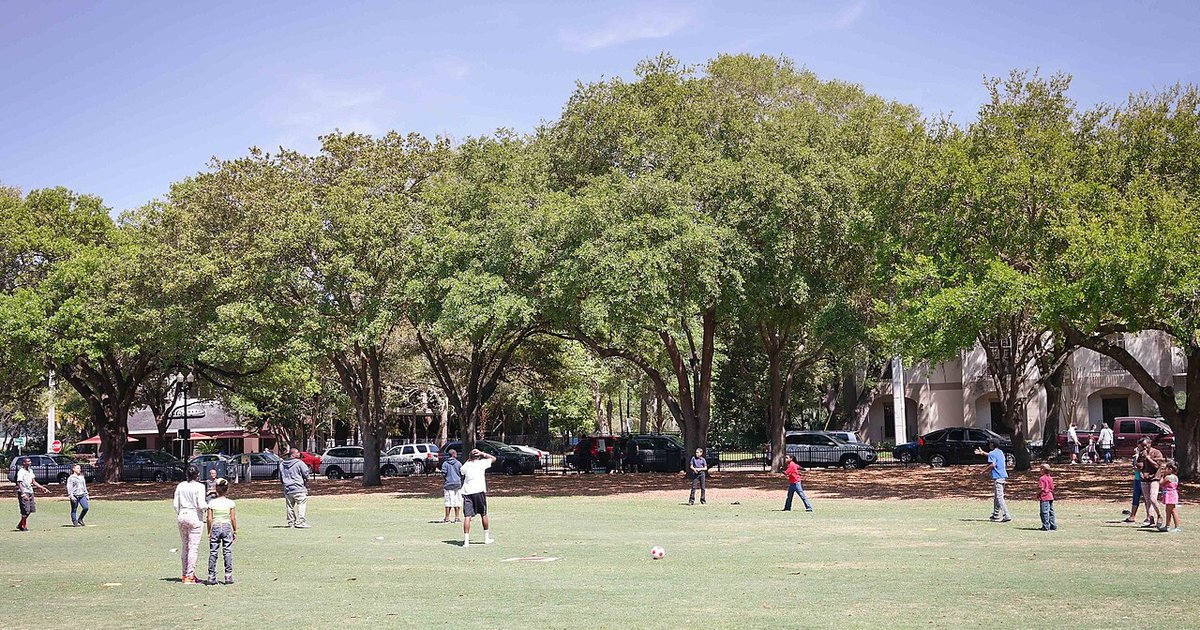
Every great player started exactly where you are now: with a ball, a patch of grass, and no idea what to practice first. The secret that experienced coaches repeat to every beginner is that improvement does not come from complicated training plans or expensive academies. It comes from simple drills, repeated until they feel easy, and then repeated a little more.
This guide collects 15 soccer drills for beginners that actually work. They need almost no equipment, they are suitable for kids and adults, and each one trains a skill you will use in every single match: dribbling, passing, shooting, or coordination. Practice a handful of them three times a week and you will feel the difference within a month. None of them require a full pitch, a team, or a coach standing over you — just a ball and the willingness to start.
What you need to get started
You need far less than you think. A ball of roughly the right size, a flat surface — grass, turf, a park, even a quiet street or backyard — and something to mark space with: cones are ideal, but shoes, water bottles, or stones work just as well. Wear comfortable shoes with decent grip; proper cleats help on grass but are not required for any drill in this guide.
Give yourself a simple structure. Warm up for five minutes with light jogging and gentle touches on the ball before any drill, and finish with five minutes of easy juggling or slow dribbling to cool down. Beginners improve fastest in short, focused sessions of 30 to 45 minutes — long enough to repeat each drill properly, short enough to stay sharp and avoid sloppy habits caused by tired legs.
One rule governs everything below: quality beats quantity. Ten careful repetitions with your head up beat fifty rushed ones staring at your feet. If a drill feels too hard, slow it down until you can do it cleanly, then add speed. Speed is the reward for technique, never the starting point.
Dribbling drills (1–4)
Dribbling is the foundation of everything. Before you can pass under pressure or shoot on the run, the ball has to feel like an extension of your foot. These four drills build close control first and speed second.
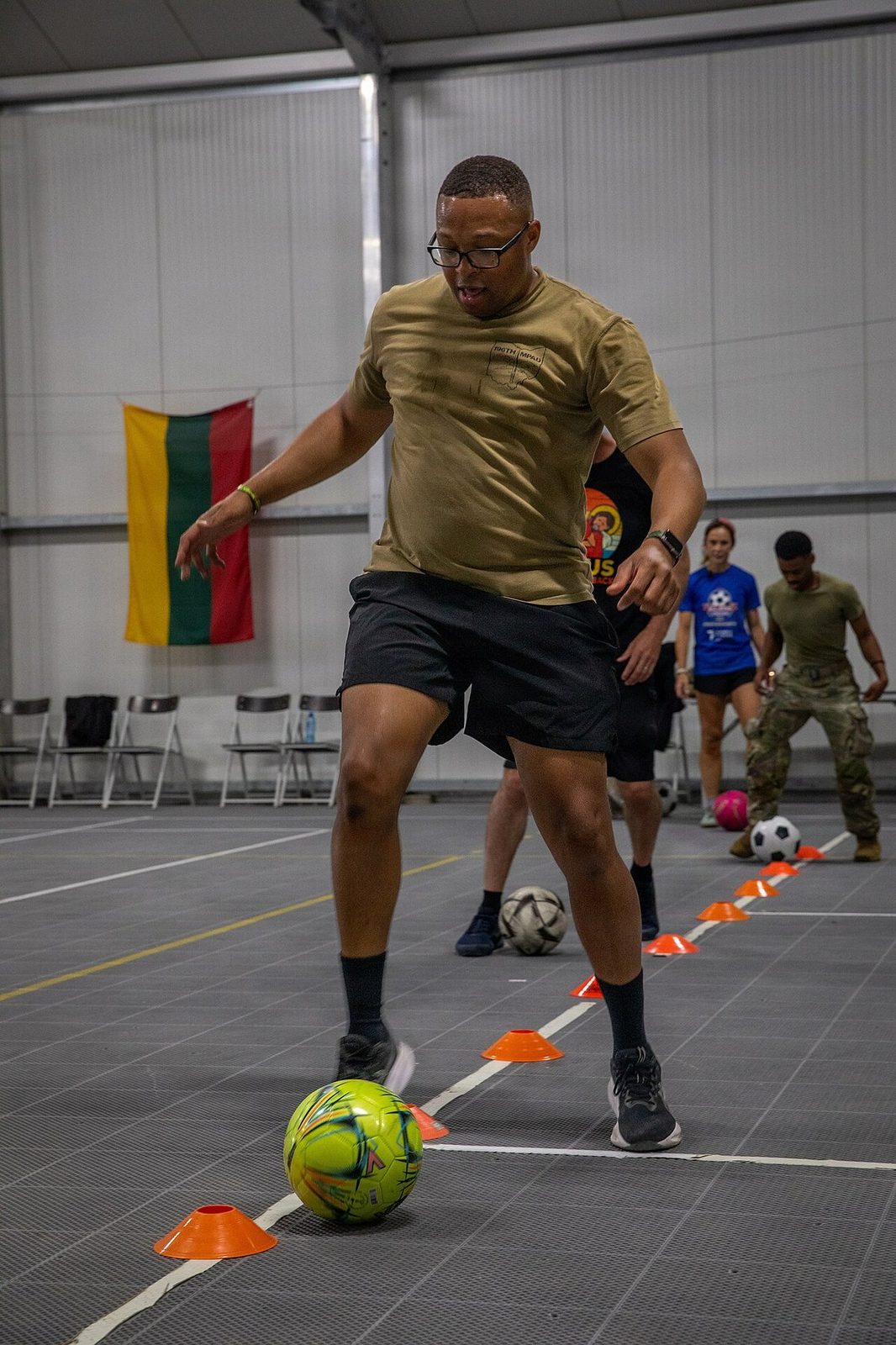
Drill 1: Cone weave (slalom). Place six to eight cones in a straight line, about a yard apart. Dribble in and out of them using the inside and outside of the same foot, keeping every touch small. Go down with your right foot and back with your left. Start at walking pace and only speed up when you can complete the line without touching a cone. This is the single best beginner drill in football — it trains close control, both feet, and quick changes of direction in one exercise.
Drill 2: Gates. Scatter pairs of cones around your space to make small "gates" about two yards wide. Dribble freely and pass the ball through as many gates as you can in 60 seconds, counting each one. Try to beat your score each round. Gates teach you to dribble with your head up — you cannot find the next gate if you are staring at the ball — and they turn close control into a game.
Drill 3: Red light, green light. A classic playground game with a ball at your feet. One player is the traffic light; the rest dribble toward them. On "green light" everyone dribbles forward; on "red light" everyone must stop the ball dead under their foot. Anyone still moving goes back to the start. It is enormous fun for kids and it secretly trains explosive starts, sudden stops, and keeping the ball close at speed.
Drill 4: Ball mastery box. Mark a small square, roughly two yards across. Inside it, alternate 30 seconds of toe taps (tapping the top of the ball alternately with the soles of your feet) with 30 seconds of foundations (rolling the ball side to side between your feet with the insides). Keep your knees slightly bent and stay on the balls of your feet. This drill builds the fast footwork that makes every other drill easier, and it needs no more space than a hallway.
Passing drills (5–8)
Passing is how teams actually move the ball, and good passers are always in demand. These drills train clean contact, first touch, and playing with both feet — the three ingredients of reliable passing.
Drill 5: Wall pass. Find a solid wall and stand about five yards away. Pass the ball against it with the inside of your foot and control the rebound with one touch before passing again. Count consecutive clean passes and try to beat your record. A wall never gets tired and never misplaces a return, which makes it the perfect passing partner for solo practice. Alternate feet every ten passes.
Drill 6: Two-touch partner passing. Stand ten yards from a partner and pass back and forth: one touch to control, one touch to pass. Focus on passing to your partner's feet, not just in their general direction, and keep the ball on the ground. Every five minutes, switch to one-touch passing for a round, then back to two-touch. This simple rhythm builds the passing tempo used in real matches.
Drill 7: Passing triangle. With two partners (or two walls of cones to aim at), form a triangle and pass around it, always receiving across your body and passing to the next point. After each pass, jog to the next corner so the triangle keeps rotating. The triangle teaches the most important passing habit in football: receiving on the half-turn with your body already facing where the ball needs to go next.
Drill 8: One-touch relay race. Split into two lines facing each other, ten yards apart. The first player in each line passes one-touch to the player opposite, then sprints to the back of the other line. The team that completes twenty clean one-touch passes first wins. The race element forces quick decisions and clean first touches — sloppy control slows the whole line down, which teaches itself.
Shooting drills (9–12)
Shooting is the skill everyone wants, but beginners should learn it in the right order: technique first, power later. A clean, well-placed shot with the inside of the foot beats a wild blast every time.
Drill 9: Target zones. Divide the goal (or a marked target area) into corners using cones or clothing. From the edge of the box, aim for a specific corner with the inside of your foot, keeping your ankle locked and your body over the ball. Alternate corners and feet. Strikers score by placement, not power, and this drill builds the habit of picking a spot before you strike.
Drill 10: Dribble and shoot. Place a cone fifteen yards from goal. Dribble at it at pace, take one touch past it to set up the shot, and finish with your second touch. The key coaching point is the set-up touch: push the ball slightly out of your feet into space so you can strike through it cleanly. This is the most match-realistic shooting drill on this list because goals rarely come from standing still.
Drill 11: Penalty kick practice. Take ten penalties, alternating corners, from the spot. Pick your corner before you start your run-up and commit to it — changing your mind mid-run is how penalties get saved or missed. Practice the same short run-up every time so it becomes automatic. Penalties are mostly mental, and routine is what steadies nerves.
Drill 12: First-time finishes. Have a partner (or a wall) play the ball across you from the side while you stand near the penalty spot. Finish first time without controlling it. Start with slow passes and only increase the pace when your timing is clean. Most goals in real matches are scored first time from crosses and cutbacks, so this drill trains the exact skill matchdays demand.
Coordination and fun games (13–15)
The last three drills are games, and that is the point. Young players — and honestly, adults too — learn fastest when they are laughing. Each of these secretly trains balance, agility, and decision-making.
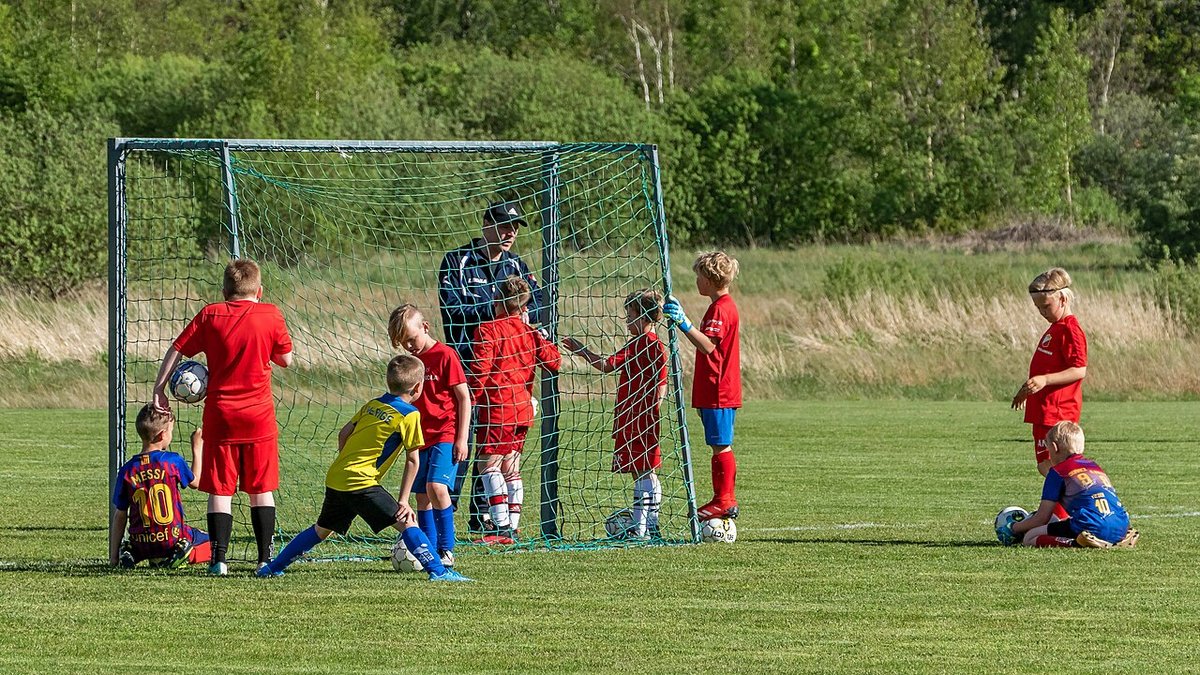
Drill 13: Sharks and minnows. One player is the shark in the middle of a marked area; everyone else is a minnow with a ball. Minnows must dribble from one end to the other without the shark kicking their ball away. Caught minnows become sharks. It is the most beloved kids' drill in football because it trains dribbling under pressure, shielding the ball, and explosive changes of direction — all disguised as a game.
Drill 14: Capture the cones. Split into two teams, each with a line of cones at their end. Players dribble into the other team's half to steal a cone and dribble it home, while defenders try to win the ball. It trains dribbling at speed, tackling timing, and the transition between attack and defense, and the team element keeps everyone competing hard.
Drill 15: Keepy-up ladder. Juggle the ball and count your touches. The ladder: reach 5, then 10, then 15, then 20 — you only move up a rung when you hit the target three times. Use feet, thighs, and head as you improve. Juggling looks like a party trick, but it is the purest first-touch training there is: every touch teaches your body exactly how the ball behaves.
How to build a 45-minute practice session
Pick four or five drills from different groups and you have a complete session. A proven structure: five minutes of warm-up touches, ten minutes of dribbling drills, ten minutes of passing, ten minutes of shooting, and ten minutes of a fun game to finish. Always end with something enjoyable — players who finish smiling come back tomorrow.
Repeat the same session for two weeks before changing it. Beginners improve through repetition, not variety; the second week of the same drills is where the real learning happens, because your body stops thinking about the drill and starts refining the technique. Track small records — most gates in a minute, longest juggling run — so progress is visible.
Train three times a week if you can, with rest days between sessions. Muscles, joints, and coordination all adapt during rest, not during the drill itself. Two focused sessions beat five exhausted ones.
Five mistakes every beginner makes
Staring at the ball. Your feet learn faster than you think — lift your eyes between touches and scan. You cannot pass to a teammate you never saw.
Only using the strong foot. The weak foot feels useless for about two weeks, then it starts working. Every drill in this guide should be done with both feet from day one.
Kicking with the toe. Toe pokes are wild and painful. Lock your ankle and strike with the inside of the foot or the laces for control and power.
Standing flat-footed. Stay on the balls of your feet with knees slightly bent. Flat feet cannot react; bouncy feet can.
Skipping the basics for tricks. Stepovers and rainbow flicks are fun, but they are built on the close control from drills 1 to 4. Master the simple stuff first and the tricks arrive on their own.
Fútbol Libre is a guide to official viewing options.
Quick answers
What are the best soccer drills for beginners? Start with cone weaves and gates for dribbling, wall passes for passing, target-zone shooting, and juggling for first touch. These five cover the core skills every beginner needs.
How often should a beginner practice soccer? Three focused sessions of 30 to 45 minutes per week is ideal, with rest days between. Short, sharp practice with good technique beats long, tired sessions.
Can adults learn soccer with these drills? Absolutely. Every drill in this guide works for adults — the only adjustment is starting slower and warming up properly, since adult joints need more care than kids'.
What equipment do beginners need for soccer drills? A ball, a flat surface, and markers like cones (or shoes and bottles). Cleats help on grass but are not required. That is genuinely all you need.
How long does it take to get comfortable with a soccer ball? Most beginners feel noticeably more comfortable within four to six weeks of practicing three times a week. Full confidence with both feet typically takes a few months of steady work.
Should beginners practice alone or with others? Both. Solo drills like the wall pass and cone weave build technique fastest, while games like sharks and minnows teach you to use that technique under pressure. Mix the two every week.