
Offside Rule Explained: The Complete Guide
By Redacción Futbollibre · Published October 21, 2026

The offside rule is football's most argued-about law — simple in concept, endlessly controversial in practice. Every weekend, goals are celebrated, then chalked off, then debated for days, all because of a law that fits in a few paragraphs of the IFAB Laws of the Game. This complete guide explains the offside rule in plain English: what it is, when it applies, when it doesn't, how VAR judges it, and why it still sparks fury in stadiums around the world.
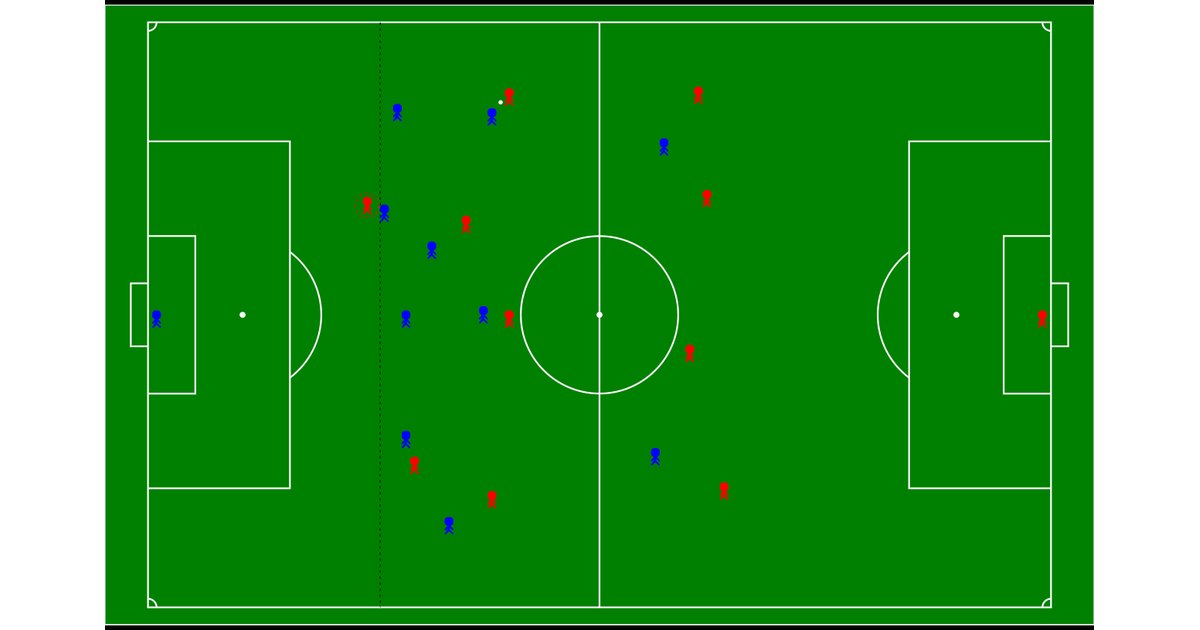
The short version: a player cannot hang around behind the defense waiting for the ball. At the moment a teammate plays the ball forward, an attacker must not be nearer to the opponent's goal line than both the ball and the second-last opponent — with their head, body or feet — unless they are in their own half or level with the defenders. Everything else is detail, and the detail is where the arguments live.
Offside position vs. offside offence: the crucial distinction
The single most misunderstood fact about offside is this: being in an offside position is not an offence in itself. The Laws of the Game are explicit — a player can stand in an offside position all afternoon without committing any foul. The offence only happens if that player becomes involved in active play at the moment the ball is played or touched by a teammate.
So the referee (and VAR) asks two questions in order. First: was the player in an offside position when the ball was played by a teammate? That means any part of the head, body or feet nearer to the opponents' goal line than both the ball and the second-last opponent. Note that the hands and arms of all players — including the goalkeeper's — do not count. Second: did the player then get involved in active play? Only if both answers are yes is the flag raised.
This is why you see attackers standing yards beyond the last defender while the ball is elsewhere — they are in an offside position, but until they touch the ball or interfere with an opponent, no offence has occurred.
What counts as "involved in active play"
The law lists three ways a player in an offside position becomes punishable, and each has generated its own library of controversies.
1. Interfering with play. The straightforward one: playing or touching the ball after it has been passed or touched by a teammate. If you are beyond the last defender when the through ball is played and you run onto it and shoot, that is offside. No debate.
2. Interfering with an opponent. The complicated one. This covers preventing an opponent from playing the ball by clearly obstructing their line of vision, challenging an opponent for the ball, clearly attempting to play a ball that is close and thereby impacting the opponent, or making an obvious action that clearly impacts the opponent's ability to play the ball. In practice, this is the clause behind disallowed goals where the scorer was onside but a teammate in an offside position was deemed to have interfered — blocking the goalkeeper's view, for example, or dummying the ball in a way that wrong-foots a defender.
3. Gaining an advantage. This covers playing the ball when it rebounds or is deflected off the goalpost, crossbar, a match official or an opponent, or when it comes from a deliberate save by an opponent. The classic case: a shot hits the post, bounces to an attacker who was in an offside position when the shot was taken — offside, because the advantage was gained from that original position.
There is an important exception to the rebound rule: if the ball comes to the attacker from a deliberate play by an opponent (a controlled pass or clearance, not a save or a deflection), the offside is reset. A defender who deliberately plays the ball effectively plays everyone onside — which is why mis-hit clearances that fall to strikers are so painful for defenders.
When you cannot be offside
The law carves out clear exceptions — moments when offside simply does not apply, no matter where the attacker stands.
In your own half. There is no offside in a player's own half of the field. A striker can stand on the halfway line and cannot be offside from it.
Level with the defenders. A player level with the second-last opponent — or level with the last two opponents — is not in an offside position. Level is onside. This is why attackers time their runs to stay exactly in line, and why VAR draws its lines with such agony: a toe can be the difference.
Direct from a goal kick. A player cannot be offside when receiving the ball directly from a goal kick. Teams exploit this with long goal kicks flicked on to strikers lurking beyond the defense.
Direct from a throw-in. Same exemption — you cannot be offside from a throw-in, which is why long throws into the box are so dangerous.
Direct from a corner kick. Corners are exempt too. (It would be absurd otherwise, given where corner takers stand.)
Note the word "directly": the exemption covers receiving the ball straight from the restart. If a teammate touches it first after the throw or corner, normal offside rules apply from that touch.
The second-last opponent, and which body parts count
People say "the last defender," but the law says the second-last opponent — because the goalkeeper is usually the last opponent, so the relevant line is typically drawn from the deepest outfield defender. If the goalkeeper has rushed out, the line might be drawn from two outfield players instead.
For judging position, the law counts the head, body and feet — any part that can legally play the ball. The hands and arms do not count, for attackers or defenders. This detail matters enormously in VAR reviews: a defender's outstretched arm does not keep an attacker onside, and an attacker's arm beyond the line does not make him offside. Only the parts you can score with are measured.
VAR and semi-automated offside
Video review transformed offside from a linesman's split-second judgment into a forensic exercise. Under VAR, officials freeze the exact frame the ball is played and draw calibrated lines across the pitch to compare the attacker's furthest-forward scorable body part with the second-last defender's.
The precision created a new controversy: goals disallowed because a shoulder, a knee or a toe was centimeters beyond the line — the so-called "armpit offsides." Fans and pundits argued this punished attacking football over margins invisible to the naked eye and contrary to the spirit of the law, which was written to stop goal-hanging, not to measure anatomy.
The response was semi-automated offside technology: ball sensors and skeletal tracking cameras that generate the offside lines automatically and render a 3D animation for broadcast. It made decisions faster and more consistent, but it did not end the arguments — it just moved them from "was he offside?" to "is this level of precision what the law is for?" Football's lawmakers have discussed trials of adjustments, including proposals to give attackers the benefit of any daylight between attacker and defender, but the core law remains unchanged.
Why offside still causes fury: the great controversies
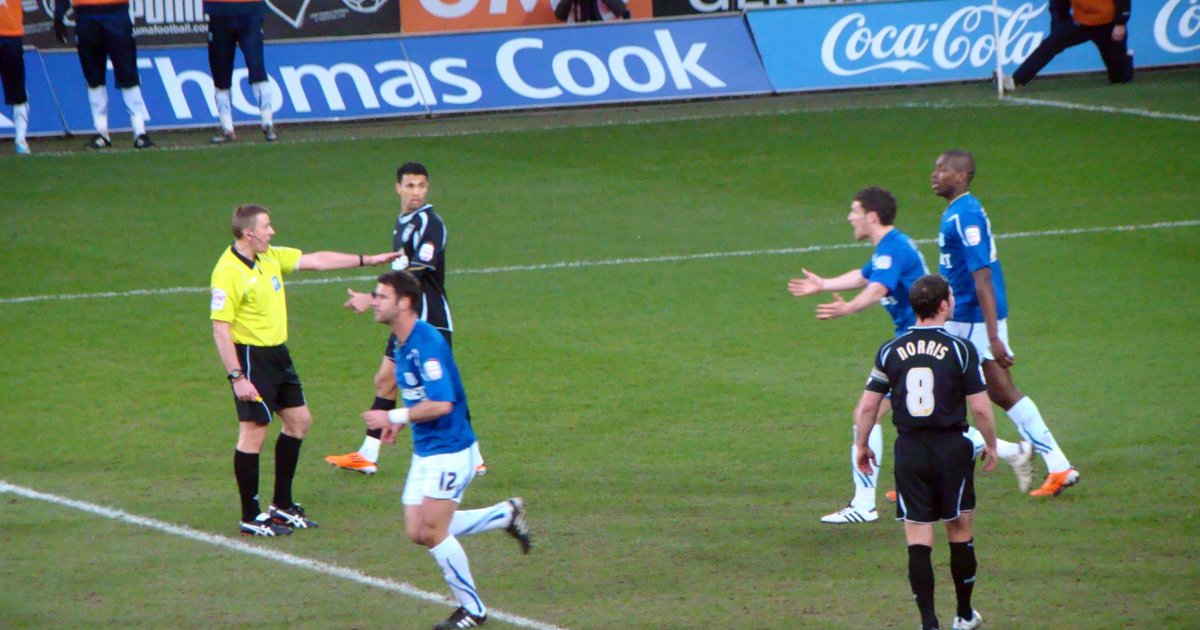
Strip away the technology and the controversies fall into a few timeless patterns. The marginal call: a title or a knockout tie decided by a freeze-frame showing a striker's toe beyond the line — technically correct, emotionally unbearable. The interference judgment: a goal disallowed because a player who never touched the ball was ruled to have blocked the goalkeeper's view or impacted a defender — the most subjective corner of the law. The delayed flag: assistant referees are now instructed to keep the flag down on tight calls and let play continue, so goals are celebrated for a minute before VAR intervenes — a procedure designed for fairness that feels cruel in the stadium.
Then there is the philosophical argument that never dies: the law exists to prevent goal-hanging and keep the game flowing, so should a kneecap really decide a Champions League semifinal? Whatever your view, the controversies prove the law is doing something right — it sits exactly on the line between attack and defense, which is where all of football's drama lives.
The offside trap: turning the law into a weapon
Defenses do not just survive the offside law — they weaponize it. The offside trap is the coordinated step-up by the defensive line at the moment a pass is played, stranding attackers beyond the second-last opponent. Done well, it kills through balls without a tackle; done badly, it gifts one-on-ones.
The trap demands perfect synchronization and total trust — one defender stepping up a fraction late destroys it. High defensive lines, like those favored by the best pressing teams, live permanently on this knife-edge: they compress the space the opponent can play in, accepting that any mistimed step is fatal. When you watch a defense spring forward in unison as a pass is released, you are watching the offside law being played as an attacking instrument.
Common offside myths, corrected
Myth: "He was offside because he was past the last defender." The line is the second-last opponent, and the goalkeeper usually counts as one of the two.
Myth: "The flag means the goal doesn't count, end of story." With VAR, the on-field decision is only the first word — tight calls are checked, and delayed flags mean play continues precisely so review can happen.
Myth: "You can't be offside from a free kick." You absolutely can. Only goal kicks, throw-ins and corners carry the exemption.
Myth: "If he's not touching the ball, he's fine." Interfering with an opponent — blocking the keeper's view, challenging for the ball, dummying it — can be offside without a touch.
Myth: "Daylight between attacker and defender is required." No — level is onside. Any measurable margin beyond the defender, however small, is offside under the current law.
Fútbol Libre is a guide to official viewing options.
Quick answers
What is the offside rule in simple terms? When a teammate plays the ball, an attacker must not be nearer to the opponent's goal than both the ball and the second-last opponent with their head, body or feet — unless in their own half or level with the defenders.
Is it offside if the player doesn't touch the ball? It can be. Interfering with an opponent — blocking the goalkeeper's view, challenging for the ball or clearly impacting a defender — is an offside offence even without touching it.
Can you be offside from a throw-in or corner? No. Players cannot be offside when receiving the ball directly from a goal kick, throw-in or corner kick.
Do arms count for offside? No. Only the head, body and feet count — the parts you can legally score with. Hands and arms are excluded for both attackers and defenders.
What is semi-automated offside? A VAR-era system using ball sensors and tracking cameras to judge offside positions automatically, producing a 3D animation of the decision for broadcast.
Why do assistant referees delay the flag now? On tight calls they keep the flag down and let play continue, so that VAR can review the phase if a goal is scored — avoiding wrongly disallowing a valid goal.