
Premier League Table
Quick answer: Premier League table explained: points, goal difference, tiebreakers, relegation and European places — and where to check the official live table.
The Premier League table is the first place every fan of English football looks: one glance shows who is winning the title, who is heading for Europe and who is fighting relegation. But the Premier League standings — the same list under a different name — only tell the whole truth if you know how to read them. What do the columns P, GD and Pts mean? Why does a team sit below a rival with the same number of points? And what happens when two teams finish the season level? This page explains the Premier League table step by step — the rules, the tiebreakers, the European places and relegation — so you can read any Premier League table, in any week of the season, in seconds.
One thing first, stated plainly: this page shows no live table. A table that changes after every goal and every matchweek cannot be honestly shown on a static page — a copied snapshot from yesterday would be wrong today. You will always find the current standings on the official Premier League site: premierleague.com/tables. What you get here is the knowledge to read that table properly — and to know exactly where to check it.
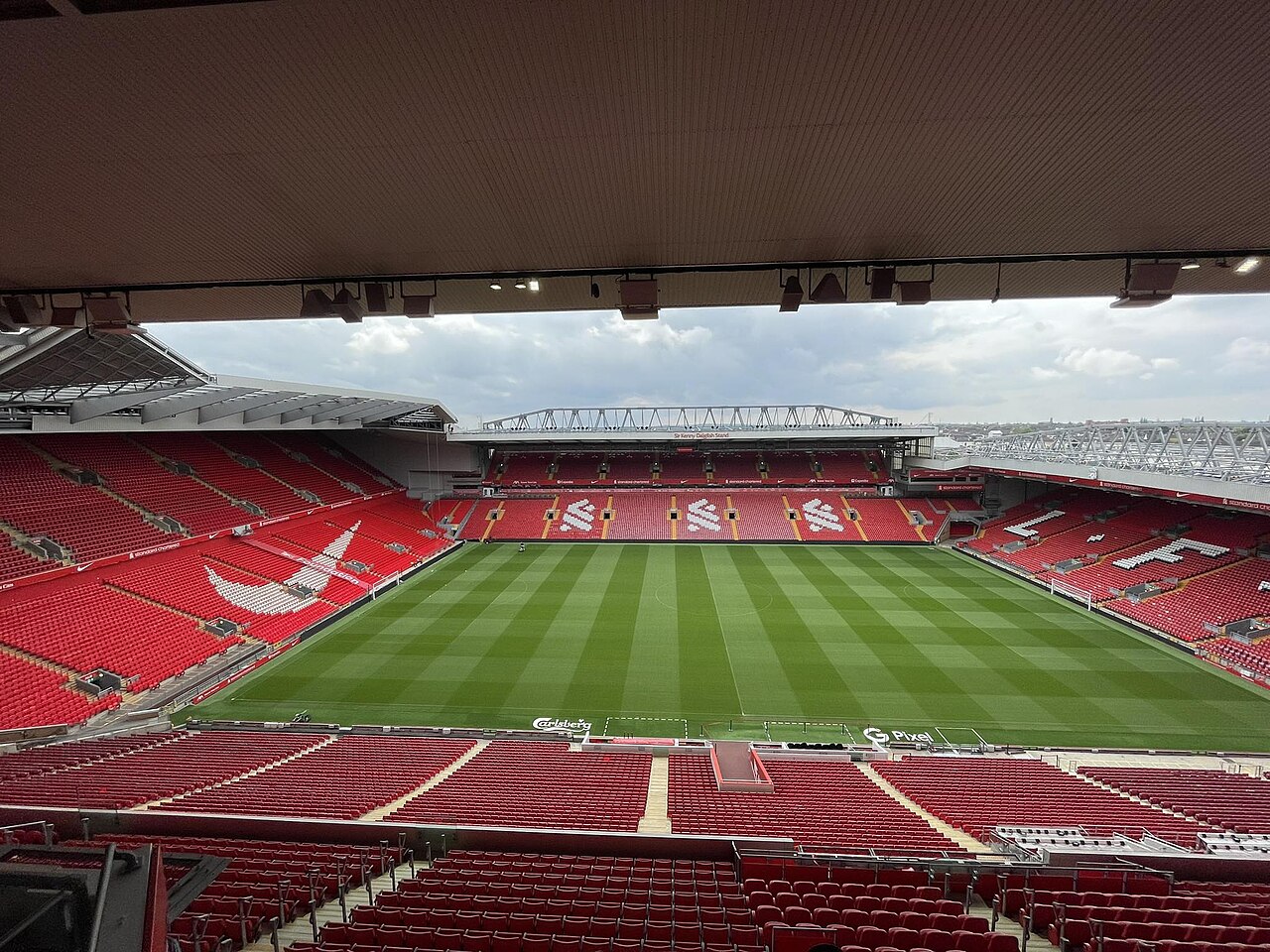
Photo: FYI2023, public domain (CC0), via Wikimedia Commons

How the Premier League table works
The Premier League is England's top division. 20 clubs play each other twice — once at home and once away — which gives every club 38 matches and the league 380 matches in a season. The 2026-27 season, the 35th season of the Premier League, started on 21 August 2026 and ends on 30 May 2027, with all ten matches of the final matchweek kicking off at the same time. The season started a week later than usual because the 2026 World Cup ran through June and July 2026.
The points system is simple and has been unchanged since the league began: a win is worth three points, a draw one point for each team, and a defeat no points. The team with the most points after all 38 matches is the champion. The teams with the fewest points go down. Everything else in the table — the European places, the relegation places, the tiebreakers — follows from those two facts and the order in which the league sorts teams that finish level.
Whether you search for "premier league table", "english premier league table" or simply "premier league" — you mean the same thing: the standings of England's top flight. The English Premier League table is not the same as the tables of the lower English divisions, the Scottish Premiership or the women's league, and this page explains how to tell them apart further down.
What every column in the Premier League table means
A row of the table looks like a wall of numbers at first glance. In fact it is only a handful of figures, and they are quick to learn:
| Column | Meaning |
|---|---|
| Pos | League position (1 to 20) |
| Club | Club name, often shortened — ARS, LIV, MCI, CHE and the like |
| P | Played — matches played so far; vital when fixtures are uneven because of postponements |
| W / D / L | Won, drawn, lost |
| GF | Goals for — goals scored |
| GA | Goals against — goals conceded |
| GD | Goal difference: goals for minus goals against, for example +20 |
| Pts | Points: wins × 3 plus draws × 1 |
| Form | Usually the last five results as W, D and L, most recent last |
A worked example: a team with 6 wins, 3 draws and 0 defeats has 6 × 3 + 3 × 1 = 21 points. If it scored 28 goals and conceded 8, its goal difference is 28 − 8 = +20. Those two numbers — points first, then goal difference — decide almost every position in the Premier League table.
Premier League standings explained
The Premier League standings are the Premier League table. The two phrases describe exactly the same thing — a ranked list of all 20 clubs, ordered by points, that shows who is winning the title, who is heading for Europe and who is fighting relegation. "Table" is the word used in England; "standings" is the word used in the United States and in much of the rest of the world, and it is the word search engines, live-score apps and American broadcasters use most. When a fan in New York searches for "premier league standings" and a fan in Manchester searches for "premier league table", they are looking for the same page, the same list and the same numbers — only the label is different.
That is why this page answers both searches. There is no separate standings competition and no second list to find: the Premier League publishes one table, and every site that shows "standings" is showing that table under another name. The same applies to the phrases around it — "premier league standings 2025/26" is last season's final table, "premier league standings today" is the table as it stands after the most recent match, and "live standings" is the table recalculated while a match is still being played. The list is one; only the moment it is read changes.
How to read the Premier League standings
Reading the standings is reading the table, and the columns are the same: position, club, played, won, drawn, lost, goals for, goals against, goal difference and points. The clubs are ordered first by points — three for a win, one for a draw — and then, when points are level, by goal difference and then by goals scored. The club at the top after 38 matches is the champion; the three clubs at the bottom are relegated. Everything between those two facts is context: the European places at the top, the relegation places at the bottom, and the long mid-table stretch where clubs are safe but going nowhere.
Three things in the standings are easy to misread. First, the position of a club that has played fewer matches than its rivals: a team in 12th with a game in hand can be mathematically ahead of a team in 9th, because it still has three points to play for. Points per game — total points divided by matches played — is the fairest comparison while the "played" column is uneven. Second, goal difference: it is the first tiebreaker, so two clubs level on points are separated by the GD column before anything else is considered. Third, form: the last five results, usually shown as W, D and L, tell you where a club is heading, while the points total tells you where it has been. A club in 6th with five straight wins is a different proposition from a club in 6th with five straight defeats, even though the standings show them on similar points.
The standings also have a rhythm across the season. After three matchweeks almost any club can sit top or bottom, and the list means very little. Around matchweek 10 it starts to settle into a shape that usually lasts: the title contenders separate from the rest, the relegation candidates become visible, and the mid-table clubs find their level. By matchweek 30 the zones are almost fixed, and the final weeks are about the margins — a single point for the title, a single goal of difference for survival. The standings from matchweek 9 are a snapshot; only the standings after matchweek 38 are final.
Finally, remember what the standings do not show. They do not show who a club still has to play: a team in fourth with a kind run-in is in a better position than a team in third with the top six still to face. They do not show injuries, suspensions or a change of manager. And a live standings page during a match is a moving target — a goal in the 90th minute can move three clubs at once, and the order at half-time is not the order at full time. The standings are the best single summary of a season, but they are a summary, not the season itself. For the full detail — the tiebreakers in order, the European places, the relegation rules and the Scottish table that shares the name — read the rest of this page, which is the same guide under the name most English fans use: the Premier League table.
Premier League table 2025/26: the season just finished
Searches for the "premier league table 2025/26" are still common, because that was the last completed season. It ended in May 2026 with Arsenal as champions. At the other end, West Ham United, Burnley and Wolverhampton Wanderers were relegated to the Championship, and Coventry City, Ipswich Town and Hull City were promoted in their place for 2026-27. The final 2025/26 table is now a historical record: the positions are fixed, and you can still check them on the official Premier League site, but they say nothing about the current season — every club started 2026-27 back on zero points.
That reset is exactly why a table needs a date. A "premier league table 2025/26" result and the current table answer different questions: one tells you how last season ended, the other tells you how this season stands. When you open a table, always check which season and which matchweek it shows — the header above the table gives both.
Title race, European places and the relegation battle
Open the Premier League table today and you see zones with very different meanings. The colours on the official table mark them, and the order is the same every season:
| Positions | What they mean |
|---|---|
| 1 | Champions — the title, decided on the final day if the race is close |
| Top 4 (or 5) | Qualification for the UEFA Champions League; in recent seasons England has earned a fifth Champions League place through UEFA's European Performance Spots, so the exact number of places is confirmed for each season by UEFA and the Premier League |
| Next places | Qualification for the UEFA Europa League and the UEFA Conference League — the FA Cup winners take a Europa League place and the EFL Cup winners take a Conference League place, which can shuffle the league places if a cup winner has already qualified through the table |
| Mid-table | No Europe, no relegation fight — safety, and the long wait for next season |
| 18–20 | Relegation to the EFL Championship |
Timing matters: only after the 38th matchweek are the champion, the European qualifiers and the relegated clubs final. A table from matchweek 9 is a snapshot. Be especially careful when clubs have played different numbers of matches — after a postponement or a rearranged fixture, the P column says more than the position does: a team in 12th with a game in hand can be mathematically ahead of a team in 9th. Always check the matchweek shown above the table and the number of games played.

Photo: Ank kumar, CC BY-SA 4.0, via Wikimedia Commons

Tiebreakers: what happens when teams finish level on points
The most important rule in the Premier League table is the order of the tiebreakers. When two or more teams finish with the same number of points, the league separates them in exactly this order — the first criterion that shows a difference ends the comparison:
- Goal difference — goals scored minus goals conceded across all 38 matches.
- Goals scored — the team that scored more goals in the whole season ranks higher.
- Head-to-head points — points earned in the two league meetings between the tied teams.
- Head-to-head away goals — goals scored away from home in those meetings.
- A one-off playoff at a neutral venue — if everything is still level for a position that matters (the title, a European place or relegation). It has never actually happened (the Premier League's official explainer).
Two things in that order surprise fans. First, goal difference comes before head-to-head — the opposite of Spain, where the direct meetings decide first. In England, a big win in August can still be worth a place in May even if you lost the direct duel. Second, the head-to-head criteria only matter at the very end: most ties are settled by goal difference alone. So when two teams sit level on points, look at the GD column first — in almost every case, that already explains the order.
Relegation and promotion: who goes down, who comes up
At the bottom of the Premier League table, the rule is brutal and simple: the three lowest-placed clubs are relegated to the EFL Championship, England's second tier, and are replaced by three clubs from the Championship. The top two Championship clubs are promoted automatically, and the third promotion place goes to the winner of the Championship playoffs — the teams finishing 3rd to 6th play semi-finals and a final at Wembley.
Relegation is decided by the table alone: no playoff saves a Premier League club, and no reprieve exists for a big name. That is why the final day at the bottom is often more dramatic than the title race — three clubs can still be in danger with one match to play, and goal difference has decided survival on the last day more than once. The promoted clubs, meanwhile, arrive with the smallest budgets in the division and the hardest job in English football: staying up.
Below the Championship sit League One and League Two, and below them the National League — but only the Championship feeds directly into the Premier League table. When you read that a club was "promoted to the Premier League", it came through the Championship, automatically or through the playoffs, and no other route exists.
The Scottish Premier League table explained
Thousands of people search for the "scottish premier league table" every month, and the phrase needs an explanation: there has been no competition officially called the Scottish Premier League since 2013. The top flight in Scotland is now the Scottish Premiership, run by the Scottish Professional Football League (SPFL). The old name stuck in search, but the league, the format and the table are different from England's.
The Scottish Premiership has 12 clubs, not 20. They play each other three times — 33 matches — and then the league splits in two: the top six play each other once more for the title and the European places, and the bottom six play each other once more against relegation. Every club therefore plays 38 matches, the same total as in England, but the last five come against only the five clubs in its own half. Points carry over the split, so a club's position after 33 games decides which half it finishes the season in — and the split can lock a mid-table club out of the top six even with games still to play.
At the bottom, the 12th-placed club is relegated automatically, and the 11th-placed club plays a two-legged playoff against a challenger from the Championship. The official table is published by the SPFL at spfl.co.uk. If you searched for the Scottish table and landed on an English one, check the league name at the top of the page: "Premiership" with 12 clubs is Scotland; "Premier League" with 20 clubs is England.
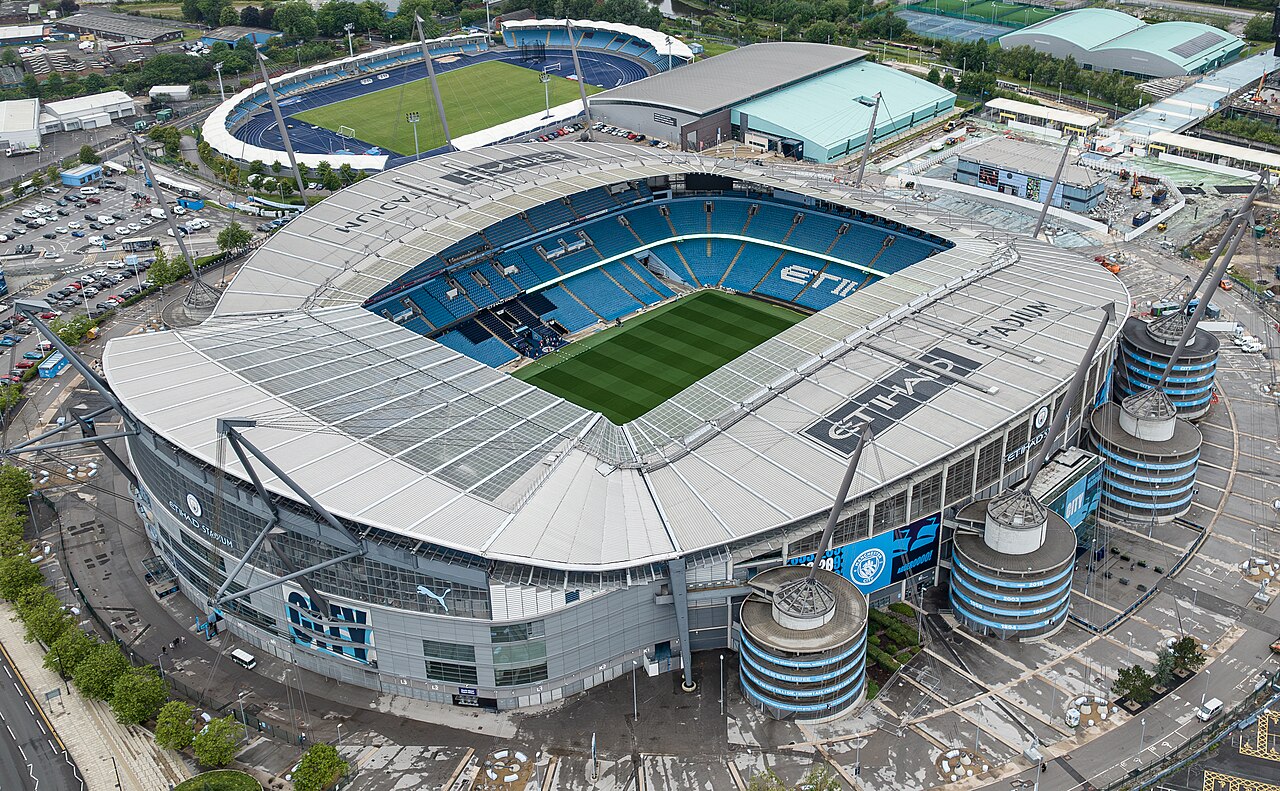
Photo: Arne Müseler / arne-mueseler.com / CC BY-SA 3.0 DE, via Wikimedia Commons

A short history of the Premier League table
The Premier League began in 1992, when the 22 clubs of the old First Division broke away from the Football League to form a new top flight. The first season was 1992-93. In 1995-96 the league shrank from 22 clubs to 20, and the 38-match, 380-match format has held ever since. The three-points-for-a-win system, introduced in England in 1981, was already in place from the start.
Manchester United have won the most Premier League titles, with 13, all under Sir Alex Ferguson between 1993 and 2013. Manchester City, Chelsea and Arsenal follow. The scoring record belongs to Alan Shearer, who scored 260 Premier League goals — a record that has stood since his retirement in 2006 and that no active player has come close to matching. The most famous finish in the table's history came in 2012, when Manchester City won their first title on goal difference over Manchester United, the two clubs level on 89 points after 38 games.
That 2012 finish is the clearest lesson the table has ever taught: goal difference is not a footnote. Two clubs can play 38 matches, win the same number of games and finish on identical points, and the title can still be decided by eight goals across a season. Every goal counts — which is why teams chasing the title keep attacking at 4-0 up in August.
Common mistakes when reading the Premier League table
Four mistakes come up again and again. First: judging the table too early. After three matchweeks almost any club can sit top or bottom; a table only starts to mean something around matchweek 10, and it is only final after matchweek 38. Second: ignoring the P column. A club with a game in hand has played fewer matches and can still add points — its position flatters its rivals, not itself.
Third: expecting head-to-head to decide ties. Fans who also follow Spain or Italy assume the direct meetings come first. In England they come third, after goal difference and goals scored — so a club can sit above a rival it lost to twice, and the table is still correct. Fourth: mixing up tables with the same name. "Premier League table" can mean England, but Scotland, Wales and several other countries have their own top flights with similar names, and the Indian Super League and other leagues are sometimes called a "premier league" too. Check the country and the number of clubs: 20 clubs is England.
Where to check the live Premier League table
The most reliable source for the current table is the official one: premierleague.com/tables is updated after every match, and it shows the table together with form, fixtures and results. BBC Sport also carries the table with reporting and analysis, and the league's own app sends a notification when the table changes after a late goal.
On Fútbol Libre, keep the table next to the rest of the picture: our Premier League 2026-27 guide explains the clubs, the calendar and the format of the season; today's fixtures show who plays and when; and live scores and results show how each round reshapes the table. The generic explainer for every league's table is our football league standings guide — this page is the Premier League edition of it.
Official tables: always check the current standings on the official Premier League site — premierleague.com/tables. No streams are hosted on this site.
Frequently asked questions
Where can I find the official Premier League table?
On the Premier League's own site at premierleague.com/tables. It is updated after every match and shows position, points, form and fixtures together. This page explains how to read the table but deliberately shows no copied live table, which would be out of date after the next match.
How many points do you get for a win in the Premier League?
Three points for a win, one point each for a draw, and no points for a defeat. The system has been in place since the Premier League began in 1992, and the champion is the club with the most points after 38 matches.
What happens if two teams finish level on points?
The tie is broken in this order: goal difference first, then goals scored, then head-to-head points, then head-to-head away goals. If everything is still level for a position that matters, the two sides play a one-off playoff at a neutral venue — which has never actually happened.
How many teams are relegated from the Premier League?
Three. The bottom three clubs go down to the EFL Championship and are replaced by the top two Championship clubs plus the winner of the Championship playoffs between the teams finishing 3rd to 6th.
What is the Scottish Premier League table?
It is the table of Scotland's top flight, now officially called the Scottish Premiership. It has 12 clubs, not 20: they play 33 matches, then split into a top six and a bottom six for five more matches each, 38 in total. The official table is published by the SPFL.
What does "game in hand" mean in the Premier League table?
It means a team has played fewer matches than its rivals, usually because of a postponement. A team three points off the top with a game in hand is effectively level. Points per game — total points divided by matches played — is the fairest comparison while the "played" column is uneven.
When does the 2026-27 Premier League season end?
On 30 May 2027. The season started on 21 August 2026, a week later than usual because of the 2026 World Cup, and all ten matches of the final matchweek kick off at the same time.
Are the Premier League standings and the Premier League table the same thing?
Yes. They are two names for the same ranked list of all 20 clubs, ordered by points, then goal difference, then goals scored. "Table" is the word used in England and "standings" is the word used in the United States and by most live-score apps — but the list, the numbers and the rules are identical. This page is the Premier League table guide, and it answers "premier league standings" searches with the same list.