A-League Results and Standings
Quick answer: A-League table 2026-27: Wellington Phoenix lead, Auckland FC 7th. Full A-League Men and Women tables, 2025-26 final standings and finals explained.
The A-League is Australia's top division of soccer — and if you follow it, the first thing you check after every round is the same thing: the results, the scores, and what they did to the table. This page explains how A-League results work, how the A-League standings (the ladder) are calculated, what the finals series means for the table, and how the A-League Men and the A-League Women differ. It also tells you exactly where to check live A-League scores, because this page deliberately prints no live table: a snapshot copied today would be wrong after the next match.
One clarification before anything else, because the names cause real confusion: the A-League is soccer. It is not to be confused with the AFL ladder — Australian rules football has its own ladder, which we explain on our AFL ladder page. Everything on this page is soccer: the Isuzu UTE A-League Men and the Ninja A-League Women.
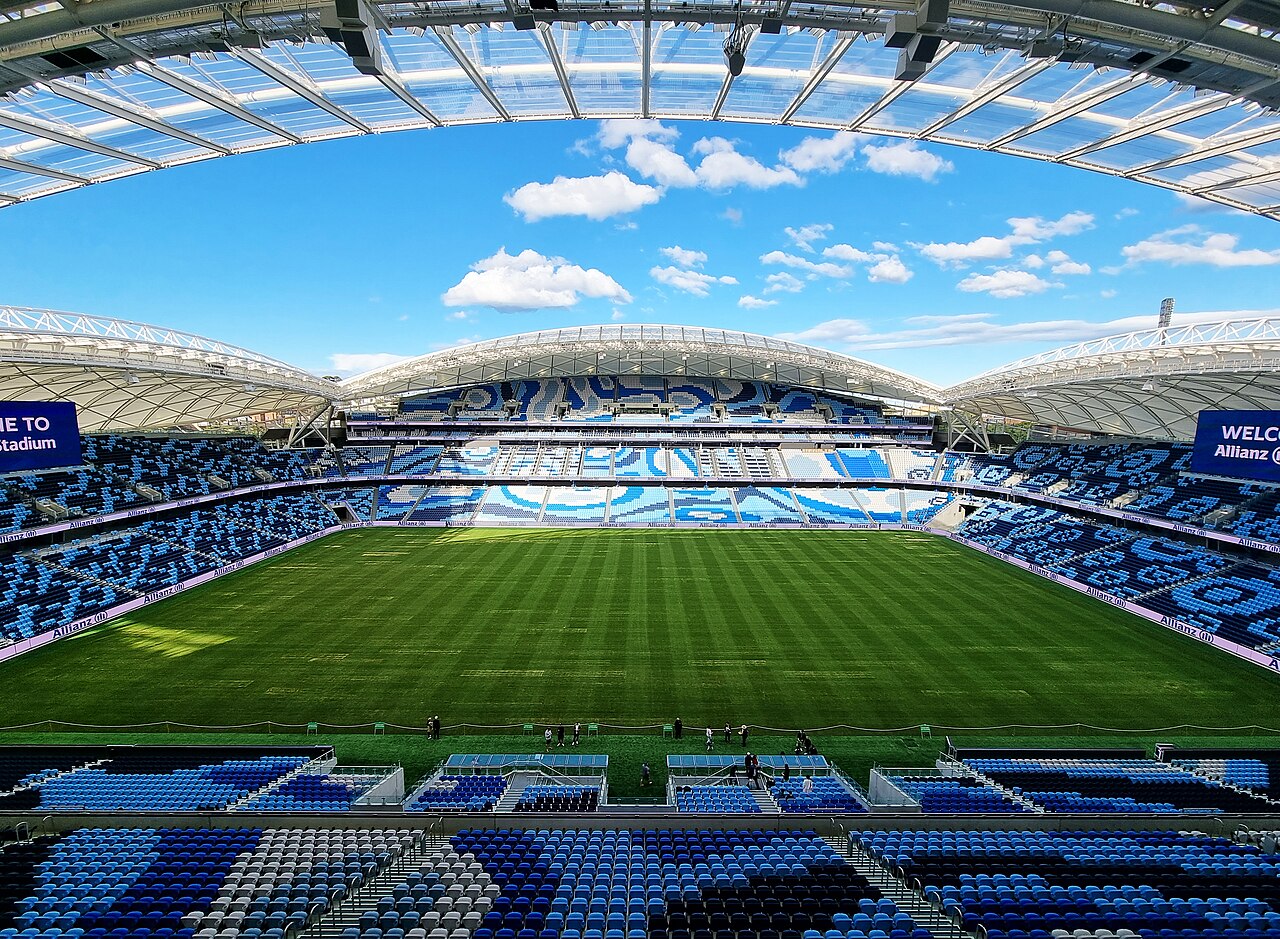
Photo: Frigginawesomeimontv, CC BY-SA 4.0, via Wikimedia Commons
What is the A-League?
The A-League is the highest level of professional soccer in Australia and New Zealand. It was established in April 2004 as the successor to the old National Soccer League, and the first season kicked off in August 2005. Sydney FC won the inaugural Grand Final in 2006, beating the Central Coast Mariners 1–0, and have since become the most successful club in the competition's history, with five championships and four premierships. The league is run by the Australian Professional Leagues, and its seasons run through the Australian summer, from October to May — the opposite of the European calendar, which is one reason the A-League is such a useful league to follow during the northern hemisphere winter.
There are two A-Leagues, and fans usually mean one of them when they search for "a league" or "aleague". The Isuzu UTE A-League Men is the men's competition, and the Ninja A-League Women — the A-League Women, sponsored by Ninja — is the women's competition. They share the same structure — a regular season followed by a finals series — but they have different numbers of clubs and different season lengths, which this page explains separately. When someone says "A-League results" without specifying, they usually mean the men's results; when they say "A-League Women results", they mean the Ninja A-League. Both are covered here.
The most important thing to understand about the A-League, before you read a single result, is that it is a closed league. There is no promotion and no relegation. Clubs hold licences to play in the league, and finishing last does not send a club down to a lower division — unlike in England, Spain or Germany, where the bottom clubs are relegated every season. That changes what the table means: at the bottom of the A-League ladder there is no survival battle, and the drama is all at the top, where six clubs qualify for the finals series and the champion is decided by a Grand Final.
A-League Men: the 12 clubs and the 2026-27 season
The 2026-27 A-League Men season has 12 clubs: Adelaide United, Auckland FC, Brisbane Roar, Central Coast Mariners, Macarthur FC, Melbourne City, Melbourne Victory, Newcastle Jets, Perth Glory, Sydney FC, Wellington Phoenix and Western Sydney Wanderers. Ten are based in Australia and two — Auckland FC and Wellington Phoenix — are based in New Zealand. Western United are no longer part of the competition, after having their participation agreement terminated before this season.
The season started on Friday 16 October 2026 with the Sydney Derby — Sydney FC against Western Sydney Wanderers at Allianz Stadium — and runs until the Grand Final on the weekend of 3–6 June 2027. Each club plays 26 regular-season matches: a full home-and-away schedule of 22 games against the other eleven clubs, plus four extra matches against selected opponents, for 156 regular-season matches in total. The regular season is played over 28 matchweeks — the league now calls them matchweeks rather than rounds — and the finals series follows in May and June.
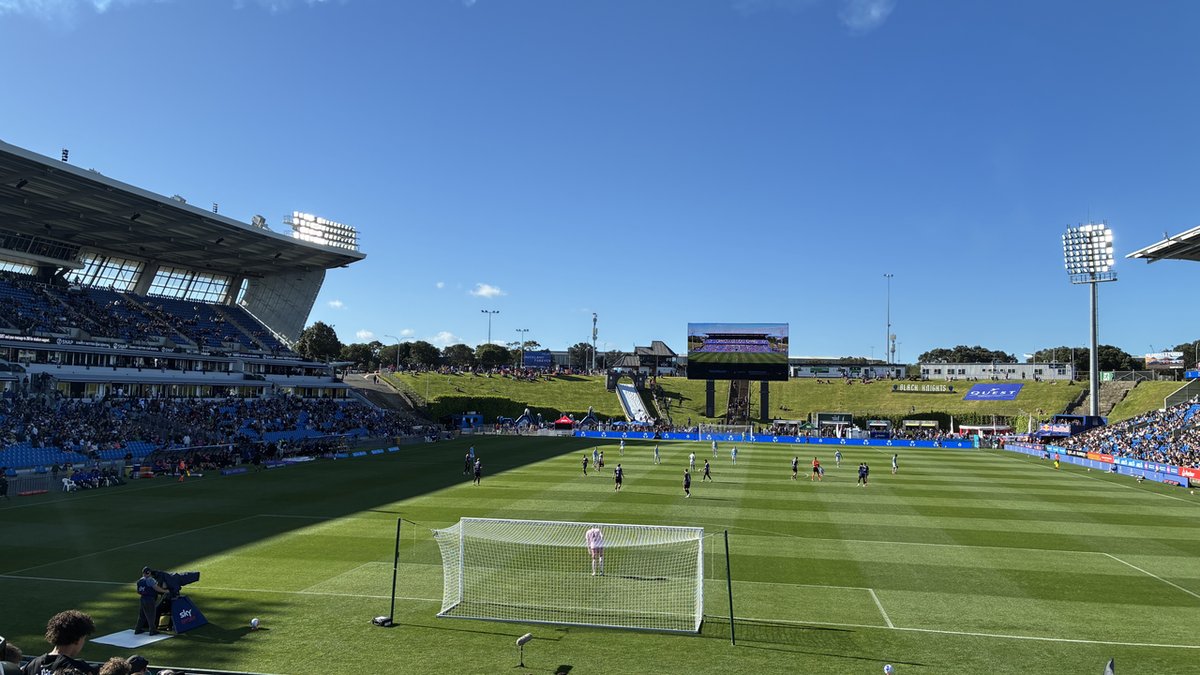
The defending premiers are the Newcastle Jets, who finished first in the 2025-26 regular season with 48 points. The defending champions are Auckland FC, who won the 2026 Grand Final 1–0 against Sydney FC on 23 May 2026 at Go Media Stadium in Auckland, in only their second season in the league. Auckland had already won the premiership in their debut season, 2024-25. Those two facts — premiers and champions — are different honours, and confusing them is the most common mistake new A-League fans make.
Premiers vs champions: the two honours in the A-League
Every A-League season produces two winners, not one. The club that finishes first on the ladder at the end of the regular season is crowned the Premier and receives the Premiers' Plate. The club that wins the Grand Final at the end of the finals series is crowned the Champion and lifts the championship trophy. Sometimes the same club wins both — a double — but often they are different clubs, as in 2025-26, when Newcastle Jets were premiers and Auckland FC were champions.
The distinction matters when you read A-League results and A-League stats. The premiership rewards consistency across 26 matches: the best team over the whole season. The championship rewards peaking at the right time: winning three or four knockout matches in May and June. Sydney FC hold the records on both counts, with four premierships and five championships, but the two lists are kept separately in every record book. When a headline says a club "won the A-League", check which one it means — and when a table shows a club in first place in March, remember that first place guarantees the Premiers' Plate, not the championship.
How the A-League standings (ladder) work
The A-League standings — Australians call the table the ladder, so "A-League ladder" and "A-League table" mean the same thing — are calculated on the same points system used almost everywhere in world soccer: three points for a win, one point each for a draw, and no points for a defeat. A club's points total is simply wins multiplied by three, plus draws. After 26 matches, the maximum possible total is 78 points, and in practice the premiers usually finish somewhere in the high 40s or 50s.
That is the easy part. The part that confuses people is the order of the tiebreakers — what happens when two clubs finish level on points. The A-League ladder is decided in this order: first points, then goal difference (goals scored minus goals conceded), then goals scored, then wins, then head-to-head results between the tied clubs, then fair play points, and finally a series of home and away goal measures — with a coin toss as the last resort if two clubs are still tied. In practice, almost every tie is settled by goal difference, so the GD column is the one to watch when two clubs sit level on points.
Reading the A-League ladder
A row of the A-League ladder looks like a wall of abbreviations at first, but it is only a handful of figures:
| Column | Meaning |
|---|---|
| Pos | League position (1 to 12 in the men's league, 1 to 11 in the women's) |
| Club | Club name, often shortened — SYD, MVC, MCY and the like |
| P | Played — matches played so far; vital early in the season when clubs have played different numbers of games |
| W / D / L | Won, drawn, lost |
| GF | Goals for — goals scored |
| GA | Goals against — goals conceded |
| GD | Goal difference: goals for minus goals against |
| Pts | Points: wins × 3 plus draws × 1 |
| Form | Usually the last five results as W, D and L, most recent last |
One more thing the ladder does not show, and newcomers always ask about: there is no relegation zone. The bottom of the A-League table carries no punishment beyond pride and, for the clubs, questions about the coach and the squad. The cut-off line that matters is the one after sixth place — the line for the finals series. Everything below it is playing for next season.
A-League results: what a scoreline tells you
An A-League result is more than a scoreline. Because the season is short — 26 matches, not 38 — every result moves the ladder more than it would in a longer league. A single weekend can lift a club three places or drop it out of the top six entirely, especially in the middle of the table, where clubs are often separated by a single point. That is why A-League scores are worth checking round by round rather than once a month: the picture changes fast, and a table from three weeks ago is ancient history.
There are a few patterns worth knowing when you read A-League results. First, home advantage is real but not overwhelming: Australian clubs travel enormous distances — Perth to Wellington is a five-hour flight — and the travel burden falls unevenly, which is one reason the same clubs tend to be strong at home. Second, the league is high-scoring by world standards, with attacking soccer encouraged by the salary-cap structure and the summer schedule; a 3–2 or 4–2 scoreline is common, and goal difference therefore swings quickly. Third, draws matter more here than in a 38-game league, because with fewer matches, two dropped points in a draw can be the difference between hosting an elimination final and missing the finals altogether.
The finals series: how the top six decide the champion
When the regular season ends, the A-League does not crown its champion from the table. Instead, the top six clubs on the ladder go into the finals series, a knockout tournament played over four weeks that ends in the Grand Final. The format for 2026-27, confirmed in the league's official competition rules, works like this:
- Week 1 — Elimination Finals: 3rd plays 6th and 4th plays 5th, in single matches hosted by the higher-ranked club. The two winners advance.
- Weeks 2–3 — Semi-finals: the top two clubs enter here. Each semi-final is played over two legs, with the lower-ranked club hosting the first leg and the higher-ranked club hosting the second; the winner is decided on aggregate score.
- Week 4 — Grand Final: a single match between the two semi-final winners, hosted by the highest-ranked club remaining. The winner is crowned A-League champion.
Seven finals matches in total decide the championship. The reward for finishing first or second is a week off and a two-legged semi-final instead of a sudden-death elimination final — a big advantage, and the main reason clubs fight so hard for the top two places rather than merely scraping into sixth. The reward for finishing third or fourth is hosting an elimination final, which matters in a league where home advantage is strong.

Photo: Paladisious, CC BY-SA 3.0, via Wikimedia Commons
A-League Women results (Ninja A-League)
The Ninja A-League Women — the A-League Women — follows the same logic as the men's league, with its own ladder, its own results and its own finals series. The 2026-27 season has 11 clubs: Adelaide United, Brisbane Roar, Canberra United, Central Coast Mariners, Melbourne City, Melbourne Victory, Newcastle Jets, Perth Glory, Sydney FC, Wellington Phoenix and Western Sydney Wanderers. There is no Auckland FC women's team yet, and no Macarthur FC women's team, which is why the women's league is one club smaller than the men's.
The women's regular season started on Saturday 17 October 2026. Each club plays 20 matches across 22 matchweeks, with two byes per club, for 110 regular-season matches in total. The final weekend of the regular season is 10–11 April 2027, the finals series starts on the weekend of 24–25 April 2027, and the Grand Final is set for 15–16 May 2027. The format mirrors the men's: the top six qualify for the finals series, with two elimination finals, two-legged semi-finals and a single-leg Grand Final hosted by the highest-ranked team.
The team to beat is Melbourne City. City are the defending premiers and the defending champions, having won their fifth title in each in 2025-26 — including a third consecutive premiership, a feat no club had achieved before in the women's competition since the introduction of a full home-and-away season. Sydney FC share the record of five championships. The women's ladder uses the same points system and the same tiebreakers as the men's — points, then goal difference, then goals scored — and the same rule applies: the premiers are the club that finishes first, and the champions are the club that wins the Grand Final.
A-League games: how a result is decided
An A-League game lasts 90 minutes plus stoppage time, like any soccer match, and if the scores are level at full time in the regular season, the result is a draw — one point each, and both clubs move on. There is no extra time and no penalty shoot-out in regular-season A-League games. That is worth knowing, because it means a late equaliser is worth a full point to the team that scores it, and a team that concedes in stoppage time loses two points, not one.
In the finals series, draws are not allowed to stand. Elimination finals and the Grand Final go to extra time and then penalties if the scores are level after 90 minutes, and semi-finals are decided on aggregate score over two legs, with extra time and penalties if the aggregate is level after the second leg. Auckland FC's route to the 2026 championship included a penalty shoot-out win over Melbourne City in the elimination finals — a reminder that in the finals, a draw is only ever a temporary state.
Discipline also feeds into results in a way that surprises newcomers: the A-League ladder's tiebreakers include fair play points, so a club that collects fewer yellow and red cards can finish ahead of a club level on points, goal difference, goals scored, wins and head-to-head record. It almost never comes to that, but it is there in the rules, and it is one more reason the league publishes the full tiebreaker order rather than just the first two steps.
A-League stats that explain results
Results tell you what happened; A-League stats tell you why. A few numbers are worth following across the season, because they predict where the ladder is heading better than the current positions do. Expected goals is the most useful: a club that keeps winning while being outshot is usually riding its luck, and a club that keeps losing while creating chances is usually about to turn a corner. Goals per game is the simplest check on whether a club's attack or defence is the problem — in a high-scoring league, a club conceding more than two goals a game cannot stay in the top six for long.
Photo: GenuineEdits, CC BY-SA 4.0, via Wikimedia Commons
A-League scores: how to follow results
The best place to check A-League scores is the source that updates them first: the official A-Leagues site at aleagues.com.au, which carries live scores, results, the ladder and the full fixture list for both the men's and women's competitions. The A-Leagues app sends notifications for goals and full-time results, and it is the fastest way to follow a match you cannot watch.
For results with reporting and context, ESPN covers the A-League with scores, tables and match reports, and score services such as Flashscore and LiveScore carry live A-League scores and results with goal scorers and match statistics. Those services are useful for checking a score quickly, but they are not the place to learn how the table works — that is what this page is for. Whatever source you use, check the same three things every time: the matchweek, the date the table was last updated, and whether the result you are looking at is a regular-season match or a finals match, because the two are counted differently.
Four mistakes come up again and again. First: treating the premiership and the championship as the same thing. A club can finish first and still lose the Grand Final — it has happened many times — and a club can finish sixth and still be crowned champion. Second: judging the ladder before every club has played the same number of games. Byes, postponements and rescheduled fixtures mean the table lies for the first two months of the season; points per game tells the truth.
Third: assuming the bottom of the table means relegation. There is none. A club in last place in March is playing for pride, for its fans and for next season — not for survival. Fourth: mixing up the two leagues. "A-League results" usually means the men's league, but the women's league plays on the same weekends, often at the same grounds, and a search result for one is easily mistaken for the other. Check the competition name at the top of the page: "Isuzu UTE A-League" is the men's league, "Ninja A-League" is the women's league.
Where to check the live A-League table and scores
The most reliable sources for current A-League results are the official ones. The A-Leagues site at aleagues.com.au publishes the live ladder, results and fixtures for both competitions, and it is updated as matches finish. ESPN carries the table with reporting and analysis, and score services such as Flashscore and LiveScore carry live scores with goal scorers and statistics. This page deliberately shows no copied table: a table that changes after every goal cannot be honestly shown on a static page, and a snapshot from yesterday would be wrong today.
On Fútbol Libre, keep the results next to the rest of the picture: our A-League fixtures today page explains the schedule, the matchweeks and how to find today's matches; our live scores and results pages cover scores across all leagues; and our football league standings guide explains how league tables work in general — this page is the A-League edition of it.
Official tables: always check the current standings on the official A-Leagues site — aleagues.com.au. No streams are hosted on this site.
Frequently asked questions
Where can I find the official A-League standings?
On the A-Leagues' own site at aleagues.com.au, which publishes the live ladder for both the A-League Men and the Ninja A-League Women. This page explains how to read the ladder but deliberately shows no copied live table, which would be out of date after the next match.
How many points do you get for a win in the A-League?
Three points for a win, one point each for a draw, and no points for a defeat — the same system used in almost every soccer league in the world. The club with the most points after the regular season wins the Premiers' Plate.
What is the difference between the A-League premier and the A-League champion?
The premier is the club that finishes first on the ladder after the regular season. The champion is the club that wins the Grand Final at the end of the finals series. They are often different clubs: in 2025-26, Newcastle Jets were premiers and Auckland FC were champions.
How many teams qualify for the A-League finals series?
Six. The top two go straight to the two-legged semi-finals, while the clubs finishing 3rd to 6th play single elimination finals to join them. The finals series lasts four weeks and ends in a single-leg Grand Final hosted by the highest-ranked club remaining.
Is there relegation in the A-League?
No. The A-League is a closed league: clubs hold licences and cannot be relegated, however badly they finish. The bottom of the ladder carries no punishment beyond pride, and the line that matters is the one after sixth place — the cut-off for the finals series.
How many teams play in the A-League Women?
Eleven in 2026-27. Each club plays 20 regular-season matches across 22 matchweeks, with two byes per club. Melbourne City are the defending premiers and champions, having won their fifth title in each in 2025-26.
What does "A-League ladder" mean?
It is the Australian name for the league table. "A-League ladder", "A-League table" and "A-League standings" all mean the same thing: the ranking of clubs by points, with goal difference as the first tiebreaker.